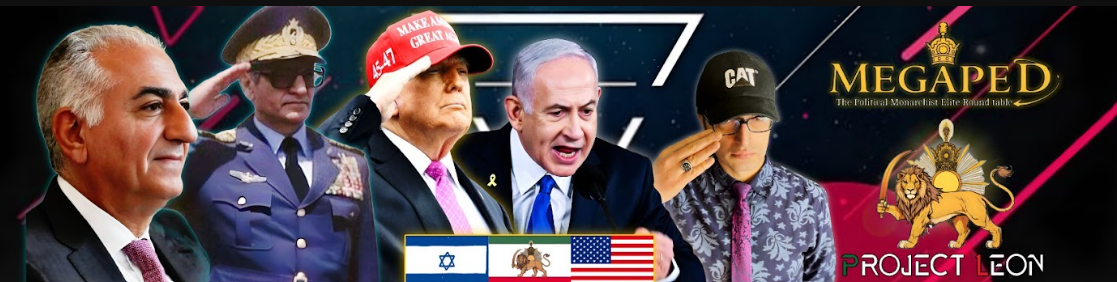

▶ Original broadcast in Farsi — English auto-generated subtitles enabled by default.
Watch on YouTube
In a landscape marked by volatility, a significant development within Iran’s Islamic Revolutionary Guard Corps (IRGC) signals a deeper strategic upheaval. The assassination of a key IRGC commander, coupled with the failure of diplomatic talks and emerging signs of a potential coup in China, underscores an increasingly fragile geopolitical order.
The Strategic Context
The past months have seen a complex interplay of tensions that define the US-Israel-Iran strategic triangle and reverberate across global power centers. Iran’s internal security apparatus faces unprecedented pressure following targeted killings of high-ranking commanders, while diplomatic efforts to restrain Tehran’s nuclear ambitions remain stalled. Meanwhile, China’s rising internal instability threatens to disrupt established alliances and global supply chains, adding layers of uncertainty to an already fraught international environment.
Iran’s IRGC Leadership Decapitation and Diplomatic Deadlock
The recent assassination of a senior IRGC commander represents a calculated blow aimed at undermining the regime’s military backbone. This event is not merely a tactical loss for Tehran but a strategic shock that could ripple through its regional proxies and military operations. Simultaneously, ongoing negotiations—likely concerning Iran’s nuclear program—have reached an impasse, reflecting Tehran’s unwillingness or inability to compromise under external pressure. This diplomatic deadlock signals a hardening stance that may provoke further regional instability and complicate efforts by the US and its allies to contain Iran’s malign activities.
What This Means
The convergence of these factors points to an imminent “big surprise” as foretold by ProjectLeon’s analysis. The IRGC’s weakening leadership combined with diplomatic failure increases the likelihood of escalations, either through proxy conflicts or internal regime crackdowns. Additionally, the mention of a possible coup in China introduces a wildcard that could recalibrate global power dynamics, potentially affecting China’s support for Iran and its broader strategic ambitions in the Middle East.
Leon’s Assessment
From ProjectLeon’s perspective, these developments represent a critical juncture. The assassination within the IRGC is a signal of effective resistance against the Iranian regime’s expansionist agenda, yet it also exposes vulnerabilities that Tehran may respond to with increased aggression. The stalled negotiations reflect a regime intransigence that undermines diplomatic solutions, thereby necessitating a recalibrated approach from Western and regional stakeholders. Meanwhile, the potential Chinese coup scenario demands close monitoring, as shifts in Beijing could either isolate Iran further or, conversely, embolden Tehran if new alliances emerge. In sum, we are witnessing a confluence of destabilizing trends that require vigilant analysis and strategic foresight.
Leon is the founder and lead analyst of ProjectLeon International, specializing in Iranian geopolitics, the US-Israel-Iran strategic triangle, and the Iranian monarchist movement.