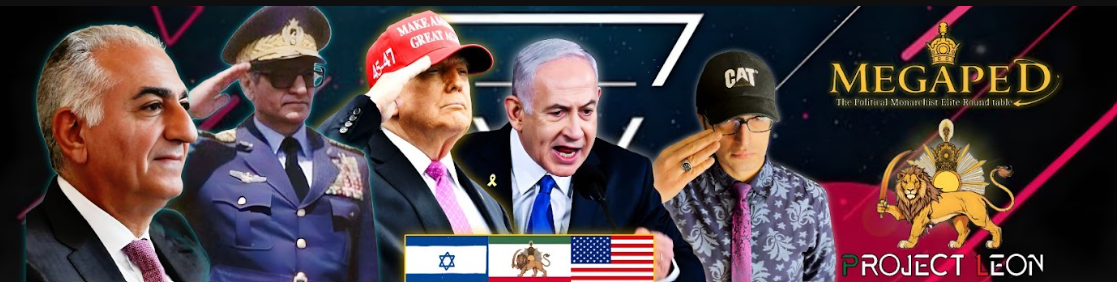

▶ Original broadcast in Farsi — English auto-generated subtitles enabled by default.
Watch on YouTube
As tensions escalate across the Middle East, the Trump administration’s intensified campaign against Iranian regime elements and their proxies signals a new phase in US-Iranian confrontation. Meanwhile, Tehran’s recent assaults on the Kurdish autonomous region underscore the regime’s desperation to maintain control amid internal fractures. At the heart of these developments lies the fate of Ejei, a key figure whose trajectory reflects the broader struggles within Iran’s security apparatus.
The Strategic Context
The US under Trump has embarked on a relentless strategy to dismantle the Iranian regime’s internal networks, focusing on rooting out traitors and weakening Tehran’s influence beyond its borders. This approach aligns with Washington’s broader objective to isolate the regime politically and economically, while simultaneously empowering opposition forces, including Kurdish factions in northern Iraq. The volatile dynamics between Iran, the US, and regional players like the Kurdistan Regional Government (KRG) have intensified amid these intersecting campaigns.
Trump’s Purge of Iranian Traitors and Regime Attacks on Kurdistan
Leon highlights that Trump’s so-called “hellish campaign” is not merely rhetorical but involves a calculated purge aimed at dismantling the Iranian regime’s internal security and intelligence operations. This effort targets corrupt officials and collaborators who have facilitated Tehran’s malign activities, thereby disrupting the regime’s cohesion. Concurrently, Iran’s recent military strikes against the Kurdish autonomous region represent a punitive response designed to intimidate and destabilize Kurdish defiance, which Tehran views as a direct threat to its territorial integrity.
The regime’s aggression against Kurdistan is symptomatic of its weakening grip, as it resorts to external aggression to mask internal vulnerabilities. The Kurdish leadership’s alignment with Western interests complicates Tehran’s calculus, prompting harsher crackdowns. These attacks also reflect the regime’s fear of Kurdish autonomy inspiring similar dissent within Iran’s own Kurdish population.
What This Means
The convergence of Trump’s crackdown on internal traitors and Tehran’s military reprisals against Kurdish forces signals a critical juncture. For the regime, these pressures exacerbate internal fissures and erode its ability to govern effectively. For the US and its allies, the situation offers an opportunity to deepen Iran’s isolation and support pro-democracy movements. However, the risk of escalating violence, including potential wider regional conflagration, remains high, necessitating careful strategic calibration.
Leon’s Assessment
From Leon’s perspective, Trump’s aggressive purge represents a decisive and necessary step to weaken the Iranian regime’s operational capabilities and morale. The simultaneous Kurdish resistance and regime crackdowns illustrate the regime’s existential crisis. The uncertain fate of Ejei — a symbol of the regime’s faltering security elite — encapsulates the broader unraveling of Tehran’s control. Leon warns that while the regime’s survival instincts drive it toward repression, sustained international pressure and support for internal opposition are crucial for catalyzing genuine change in Iran’s political landscape.
Leon is the founder and lead analyst of ProjectLeon International, specializing in Iranian geopolitics, the US-Israel-Iran strategic triangle, and the Iranian monarchist movement.