
▶ Original broadcast in Farsi — English auto-generated subtitles enabled by default.
Watch on YouTube
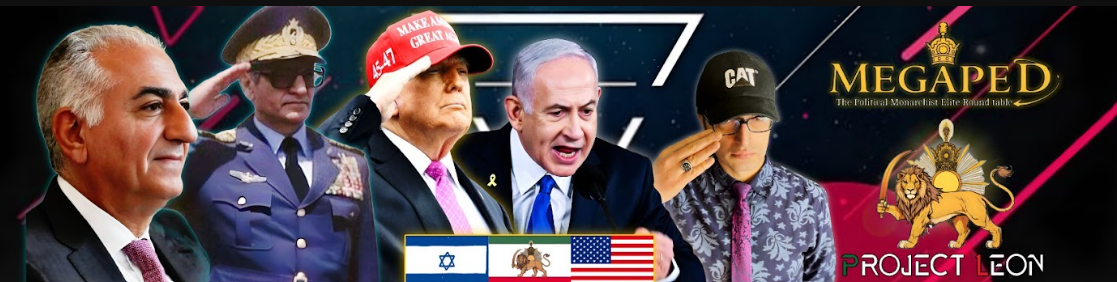
In a recent update, Leon highlights a pivotal moment in Middle Eastern geopolitics, where former US President Donald Trump and Israeli Prime Minister Benjamin Netanyahu appear poised to initiate a decisive campaign against the Iranian regime. This development coincides with intensified assaults on Russian interests and mounting pressure on Yemen’s Houthi rebels, all within the context of growing instability in the Makkah Pact alliance.
The Strategic Context
The geopolitical landscape of the Middle East in 2026 is characterized by heightened tension and strategic realignment. The coalition of US and Israeli forces, emboldened by shifts in regional alliances, is increasingly focused on dismantling Iran’s nuclear and military capabilities. Concurrently, Russia’s involvement in the region faces growing challenges, while the Houthi insurgency in Yemen is under intensified military pressure. The Makkah Pact—a coalition purportedly aimed at regional stability—is showing signs of strain, underscoring the complexity of the current conflict dynamics.
Imminent Offensive Against the Iranian Regime and Regional Ramifications
Leon interprets public signals from Trump and Netanyahu as a clear indication that a major strike against the Iranian regime is on the horizon. This coordinated stance reflects a strategic decision to capitalize on Iran’s internal vulnerabilities and external overextensions. Meanwhile, Russia’s position is being undermined through successive blows, aimed at curbing its influence in Syria and beyond. The Houthi forces, backed by Iran, are simultaneously facing intensified assaults, which Leon sees as a deliberate effort to dismantle Tehran’s proxy network.
The weakening of the Makkah Pact—a coalition of Sunni Arab states—further complicates this picture. Internal divisions and shifting loyalties within the pact reduce its effectiveness as a counterbalance to Iranian influence, providing an opening for US-Israel initiatives to reshape regional power structures more decisively.
What This Means
The convergence of these developments signals a potential turning point in the long-standing confrontation with the Iranian regime. The coordinated pressure from the US and Israel, compounded by setbacks to Russian and Houthi allies, may precipitate the regime’s destabilization. However, this escalation also risks broader regional instability, particularly if the Makkah Pact dissolves further, creating vacuums that could be exploited by extremist groups or rival powers seeking influence.
Leon’s Assessment
From Leon’s analytical vantage, the current juncture represents both an opportunity and a risk. The planned offensive could finally dismantle the Iranian regime’s capacity for regional aggression and nuclear development, aligning with pro-democracy and pro-Pahlavi aspirations for a free Iran. Nevertheless, success depends on sustaining regional alliances and managing the aftermath carefully to prevent chaos. The fracture within the Makkah Pact underscores the necessity for a cohesive strategy among US, Israeli, and moderate Arab partners. Leon advocates for decisive yet calibrated action that prioritizes regime change while supporting the emergence of stable governance structures aligned with democratic and pro-Western values.
Leon is the founder and lead analyst of ProjectLeon International, specializing in Iranian geopolitics, the US-Israel-Iran strategic triangle, and the Iranian monarchist movement.