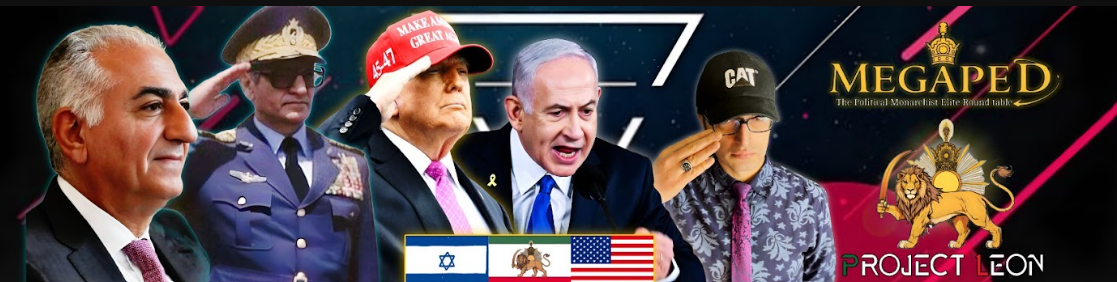

▶ Original broadcast in Farsi — English auto-generated subtitles enabled by default.
Watch on YouTube
On the night of the Third of Aban, a significant declaration emerged that carries profound implications for Iran’s internal resistance and the broader Middle East geopolitical landscape. This statement, underscored by the Iranian monarchist movement, signals a renewed strategic posture against the regime’s authoritarian grip and its destabilizing regional ambitions.
The Strategic Context
The Third of Aban corresponds to October 25 in the Gregorian calendar, a date loaded with historical and revolutionary symbolism within Iran. Against the backdrop of escalating domestic unrest and international pressure, the regime faces unprecedented challenges. The announcement comes amid rising tensions within Iran, ongoing covert and overt operations by the US-Israel axis to counter Tehran’s nuclear and military ambitions, and the persistent struggle of pro-democracy advocates aiming to restore secular governance and national sovereignty under the Pahlavi legacy.
The Third of Aban Declaration: Content and Implications
Leon interprets this declaration as more than a routine communiqué; it is a strategic manifesto articulating the monarchist movement’s vision for Iran’s future. The declaration openly challenges the regime’s legitimacy, calling for united resistance and emphasizing the necessity of reclaiming Iran’s national identity from theocratic domination. It also implicitly critiques the failures of prior opposition efforts by advocating a more cohesive and internationally aligned approach. The timing of this announcement is particularly critical, as it seeks to capitalize on the regime’s vulnerabilities exposed by economic crises and popular dissatisfaction.
Moreover, the declaration hints at a recalibration of alliances within the Iranian opposition and a re-engagement with external actors sympathetic to regime change, notably the United States and Israel. This signals a strategic convergence that aligns domestic resistance with the broader geopolitical goal of containing Iran’s regional influence and nuclear ambitions.
What This Means
The Third of Aban Declaration marks a potential inflection point in the Iranian opposition’s trajectory. It could galvanize disparate resistance factions under a unified banner, enhancing operational effectiveness and international legitimacy. For the US-Israel axis, this development offers an opportunity to deepen cooperation with indigenous forces committed to democratic restoration, thereby increasing pressure on the regime from within. However, it also raises the stakes, as the regime is likely to respond with intensified repression and propaganda, potentially escalating regional instability.
Leon’s Assessment
From Leon’s analytical perspective, the Third of Aban Declaration embodies a critical evolution in Iran’s pro-democracy movement. It reflects a mature strategic recalibration that leverages historical symbolism, unites internal opposition, and aligns with external geopolitical interests. While the path forward remains fraught with challenges, this declaration demonstrates the resilience and adaptability of Iran’s monarchist and democratic forces. In the broader Middle East context, it underscores the enduring contest between authoritarianism and democracy, with profound implications for regional security and the future of Iranian sovereignty.
Leon is the founder and lead analyst of ProjectLeon International, specializing in Iranian geopolitics, the US-Israel-Iran strategic triangle, and the Iranian monarchist movement.