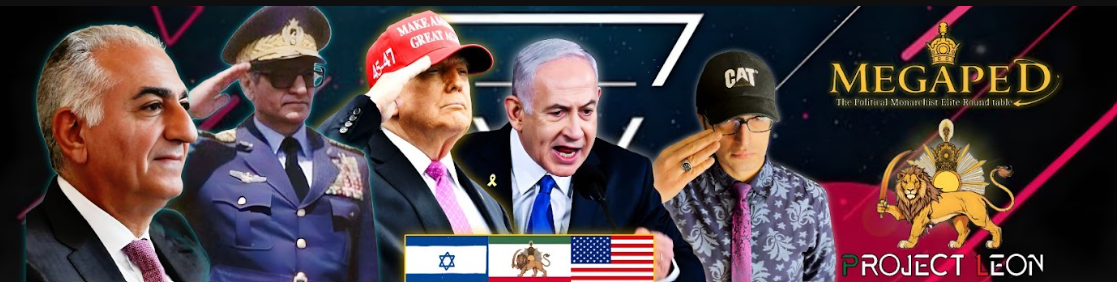

▶ Original broadcast in Farsi — English auto-generated subtitles enabled by default.
Watch on YouTube
The Strategic Context
In the complex and volatile landscape of Middle Eastern geopolitics, Iran remains a central player whose internal and external dynamics significantly impact regional stability. The ongoing tensions between Tehran, Israel, and the United States underscore the need for a nuanced understanding of Iran’s domestic opposition forces, particularly the monarchist movement advocating for a democratic future. Against this backdrop, cultivating strategic awareness has become essential for those seeking to influence or anticipate the regime’s trajectory and regional policies.
Awareness as a Strategic Imperative
In his recent discourse titled “آگاهیه” (Awareness), Leon emphasizes that the foundation of any effective opposition or strategic policy must be built upon a clear and comprehensive understanding of both Iran’s internal realities and the broader geopolitical chessboard. Awareness transcends mere information gathering; it involves critical analysis of the regime’s tactics, motivations, and vulnerabilities. For the pro-democracy movement and external actors such as Israel and the United States, heightened awareness enables the anticipation of regime responses, the identification of leverage points, and the crafting of more precise, impactful strategies.
Leon further argues that awareness also serves as a safeguard against misinformation and manipulation, which are rampant in the region’s information environment. The Iranian regime’s propaganda and covert operations seek to sow division and confusion among opposition groups and their international supporters. Therefore, a disciplined, informed approach is necessary to maintain cohesion and resilience within the monarchist movement and allied external actors.
What This Means
The emphasis on awareness underscores a strategic shift from reactive to proactive engagement with Iran’s geopolitical challenges. For policymakers and analysts, this approach demands deeper intelligence integration, cross-disciplinary collaboration, and a commitment to transparency within opposition networks. It also implies that external supporters, particularly Israel and the United States, must prioritize reliable intelligence sharing and nuanced policy calibration to avoid missteps that could strengthen the regime or alienate the opposition.
Leon’s Assessment
Leon’s analysis reveals that awareness is not merely a tactical tool but a strategic imperative that could determine the success or failure of efforts to promote democracy and counter Iran’s regional ambitions. By fostering an environment where information is critically assessed and strategically applied, the monarchist movement can enhance its operational effectiveness and international credibility. Moreover, Leon contends that only through such disciplined awareness can the pro-democracy camp outmaneuver the regime’s authoritarian resilience and contribute meaningfully to a future where Iran embraces freedom, stability, and constructive engagement with its neighbors.
Leon is the founder and lead analyst of ProjectLeon International, specializing in Iranian geopolitics, the US-Israel-Iran strategic triangle, and the Iranian monarchist movement.