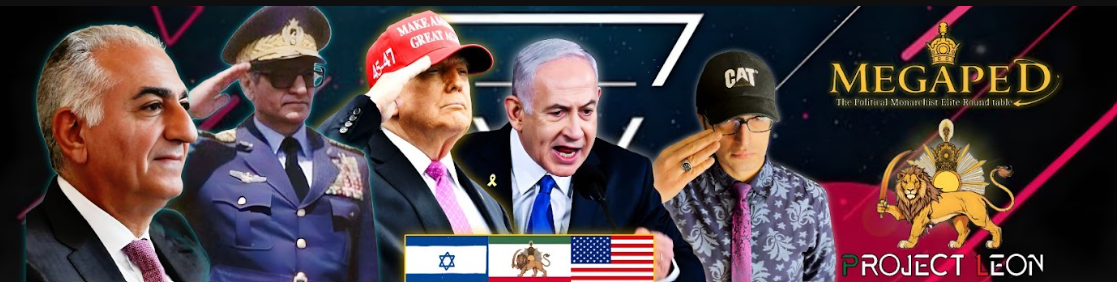

▶ Original broadcast in Farsi — English auto-generated subtitles enabled by default.
Watch on YouTube
As the World Cup concludes, Iran stands on the precipice of an unavoidable conflict, shaped by both regional dynamics and global geopolitical maneuvers. Leon unpacks the intricate strategic landscape, highlighting the regime’s calculated moves, the deceptive peace overtures in Ukraine-Russia, and the critical disclosures made by former President Trump that expose Tehran’s vulnerabilities.
The Strategic Context
The Middle East remains a volatile chessboard where Iran’s ambitions collide with the regional and international order. The recent lull during the World Cup allowed Tehran to regroup, but the cessation of the event signals a renewed phase of aggressive maneuvering. Concurrently, the international focus on the Ukraine-Russia conflict and its elusive peace process creates a complex backdrop, offering both potential distractions and strategic traps. Lebanon’s political turbulence further compounds instability, influenced heavily by Iran-backed factions. Meanwhile, revelations from Donald Trump introduce fresh dimensions to understanding Tehran’s internal dynamics and external strategies.
Iran’s Calculated March Toward War and the Ukraine-Russia Peace Trap
Leon’s analysis identifies the post-World Cup period as a critical juncture where the Iranian regime appears poised for escalation, potentially initiating or intensifying conflict in the region. This inevitability stems from the regime’s internal pressures and its desire to assert dominance before any potential diplomatic resolutions can constrain its actions. The so-called “Ukraine-Russia peace trap” refers to the false hope or strategic manipulation surrounding peace talks in Eastern Europe, which Iran and its proxies might exploit as a smokescreen to advance their military objectives unnoticed.
Additionally, Trump’s recent disclosures shed light on previously opaque facets of the regime’s operations, revealing vulnerabilities that the West and Israel could leverage. Lebanon’s ongoing chaos, often overshadowed by other crises, plays a pivotal role as a staging ground for Iranian proxies, illustrating the interconnected nature of Tehran’s regional ambitions.
What This Means
The convergence of these factors suggests a heightened risk of broader conflict in the Middle East, with Iran leveraging geopolitical distractions to consolidate power and prepare for confrontation. The international community must recognize the interplay between the Ukraine-Russia situation and Middle Eastern dynamics, avoiding complacency in response to misleading peace overtures. Understanding Trump’s insights into the regime offers potential strategic advantages for policymakers seeking to counter Iran’s expansionism.
Leon’s Assessment
From Leon’s perspective, the Iranian regime’s trajectory is unmistakably toward war once the global spotlight shifts away post-World Cup. The “peace” discussions in Ukraine represent not genuine diplomacy but strategic diversion, enabling Tehran’s aggressive designs to proceed unchecked. Trump’s revelations, while controversial, provide invaluable intelligence that exposes cracks within the regime’s facade, suggesting opportunities for concerted pro-democracy and pro-Israel actors to intensify pressure. Lebanon’s instability remains a critical flashpoint, underscoring the regime’s reliance on proxy networks. Ultimately, Leon argues that only a robust, informed, and unified response can prevent Iran’s ambitions from plunging the region into further chaos.
Leon is the founder and lead analyst of ProjectLeon International, specializing in Iranian geopolitics, the US-Israel-Iran strategic triangle, and the Iranian monarchist movement.