
▶ Original broadcast in Farsi — English auto-generated subtitles enabled by default.
Watch on YouTube
In a critical moment for Iran and the broader Middle East, Leon has issued a declaration that signals a pivotal shift in the discourse surrounding Iran’s political future and its regional interactions. This statement is more than rhetoric; it offers a strategic blueprint that challenges prevailing paradigms and advocates for decisive change.
The Strategic Context
The Middle East remains a complex theater of geopolitical tension, with Iran at its center. The ongoing struggle between theocratic authoritarianism and burgeoning pro-democracy movements within Iran intersects with the strategic interests of regional powers, notably Israel and the United States. The recent years have witnessed heightened volatility, marked by proxy conflicts, nuclear tensions, and fluctuating U.S. policies under different administrations. Against this backdrop, Leon’s declaration emerges as a critical intervention, seeking to reframe Iran’s trajectory toward restoration and democratic governance.
Leon’s Declaration: Reclaiming Iran’s Sovereignty and Regional Stability
Leon’s statement articulates a comprehensive vision that underscores the imperative of dismantling the entrenched regime that has governed Iran since 1979. His message is clear: the path to stability and prosperity lies in embracing the legacy of the Pahlavi era’s constitutionalism, secularism, and modernization efforts. The declaration critiques the regime’s ideological rigidity and its destabilizing regional policies, arguing that genuine sovereignty can only be achieved through a democratic and inclusive political order.
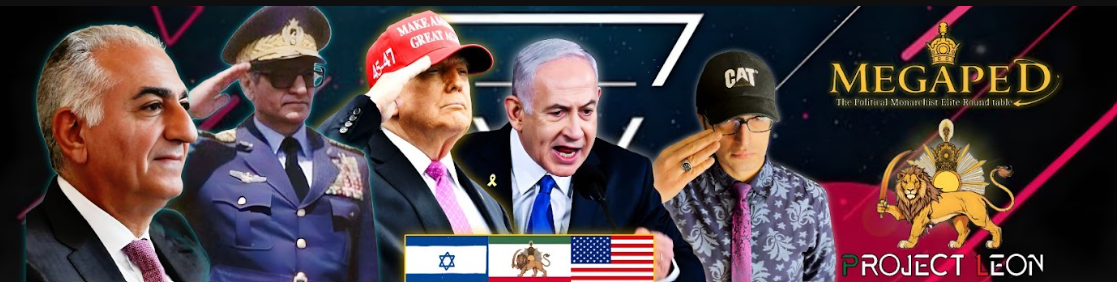
Moreover, Leon emphasizes the critical role of strategic alliances, particularly with Israel and the United States, in countering Iran’s regime-driven aggression and nuclear ambitions. He advocates for a reinvigorated U.S.-Israel-Iran axis that supports Iranian pro-democracy activists and counters Tehran’s influence in the region. This approach departs from conventional diplomacy by prioritizing internal regime change as the linchpin to long-term peace and security.
What This Means
Leon’s declaration signals a shift from reactive policy measures to proactive strategic planning aimed at Iran’s transformation. It urges international stakeholders to recalibrate their engagement strategies, focusing on empowering Iranian civil society and opposition forces rather than merely containing Tehran’s external behavior. This perspective injects a new level of urgency and clarity into debates about Middle East stability, highlighting that Iran’s internal dynamics are inseparable from regional geopolitics.
Leon’s Assessment
From Leon’s analytical vantage point, this declaration is not simply a manifesto but a call to action grounded in historical insight and contemporary realities. He contends that the failure to support a democratic Iran risks perpetuating conflict and instability. By advocating for a return to the principles of the Pahlavi era, Leon offers a roadmap that aligns Iran’s national interests with those of its democratic allies. The declaration thus represents both a strategic framework and a moral imperative for those committed to a free, stable, and prosperous Middle East.
Leon is the founder and lead analyst of ProjectLeon International, specializing in Iranian geopolitics, the US-Israel-Iran strategic triangle, and the Iranian monarchist movement.