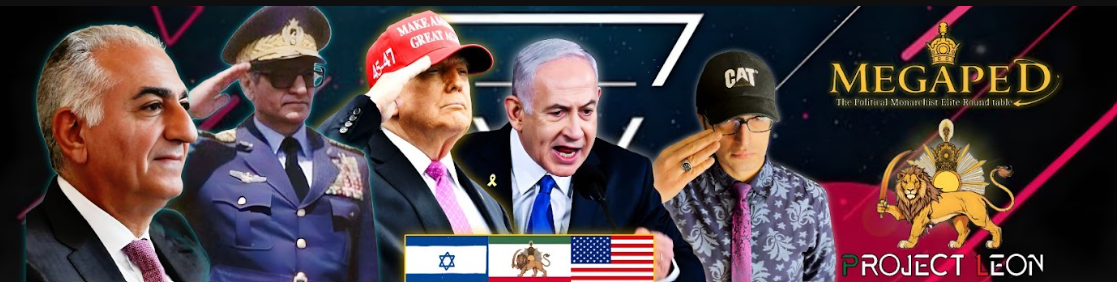

▶ Original broadcast in Farsi — English auto-generated subtitles enabled by default.
Watch on YouTube
The Strategic Context
As of late July 2026, the Middle East continues to be a crucible of geopolitical tension, with Iran recalibrating its posture amid intensifying internal dissent and external pressures. The Islamic Republic’s leadership faces mounting challenges from both the persistent pro-democracy movement within Iran and the tightening strategic alignment between the United States and Israel. Against this backdrop, Tehran’s recent actions reflect a dual strategy of defiance and calculated risk-taking, attempting to assert regional influence while countering Western and Israeli containment efforts.
Analyzing Tehran’s Latest Maneuvers
In the July 26 update, Leon highlights Iran’s nuanced approach as it navigates heightened sanctions, intelligence operations, and proxy conflicts. Notably, Tehran has increased its asymmetric operations targeting US and Israeli interests, signaling a willingness to escalate without crossing thresholds that would provoke direct military retaliation. This calibrated escalation includes expanded support for proxy militias in Iraq and Syria, cyber operations aimed at critical infrastructure, and enhanced missile tests intended to demonstrate deterrence capability.
Simultaneously, Iran has engaged in diplomatic posturing, leveraging regional alliances and exploiting fissures within the Gulf Cooperation Council to undermine US influence. Leon emphasizes that these maneuvers are not merely reactionary but part of an adaptive strategy designed to preserve regime survival while projecting power. Importantly, Tehran’s internal instability, driven by the ongoing pro-democracy protests and economic hardships, constrains its operational latitude, forcing the regime to balance aggression with caution.
What This Means
The implications of Iran’s recent shifts are profound for regional security and the broader US-Israel-Iran strategic triangle. Tehran’s continued proxy engagements and asymmetric tactics increase the risk of inadvertent escalation, potentially drawing the United States and Israel into more direct confrontations. Moreover, the regime’s attempts to fracture regional alliances complicate Western diplomatic efforts, necessitating a recalibrated approach that integrates hard power with nuanced political engagement. For pro-democracy advocates and monarchist movements, these developments underscore the urgency of international support to amplify internal opposition and undermine the regime’s legitimacy.
Leon’s Assessment
From Leon’s analytical perspective, Iran’s behavior in this period reflects a regime at a crossroads—determined to resist external pressures yet increasingly vulnerable internally. The calculated provocations serve as a distraction from domestic crises and a message to both regional adversaries and Western powers that Tehran remains a formidable actor. However, Leon cautions that this posture is inherently unstable; without significant internal reform or regime change, the risk of miscalculation escalates. Consequently, Leon advocates for a strategic approach that empowers Iranian pro-democracy forces while maintaining credible deterrence to prevent reckless escalation, thereby advancing both regional stability and the cause of freedom in Iran.
Leon is the founder and lead analyst of ProjectLeon International, specializing in Iranian geopolitics, the US-Israel-Iran strategic triangle, and the Iranian monarchist movement.