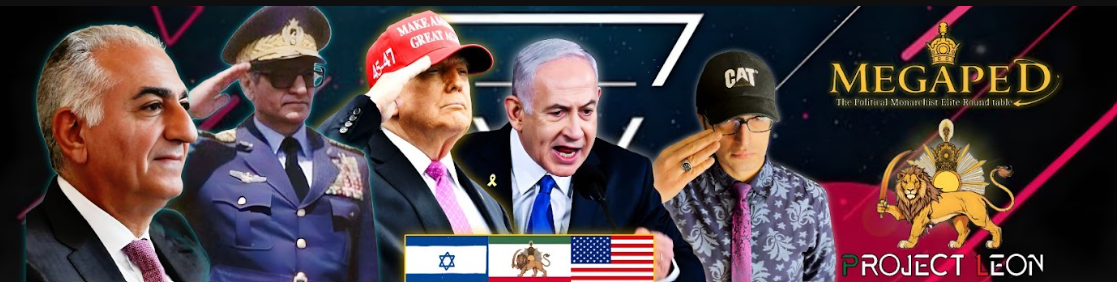

▶ Original broadcast in Farsi — English auto-generated subtitles enabled by default.
Watch on YouTube
Recent developments within Iran’s military and Israel’s operational theaters underscore a critical juncture in Middle East geopolitics. As Tehran grapples with internal threats and external pressures, Israel is simultaneously advancing strategic operations, particularly in Lebanon, signaling a complex interplay of regional power dynamics.
The Strategic Context
Iran’s internal stability is increasingly fragile, with its armed forces confronting anti-coup sentiments and potential fractures within the military hierarchy. This unrest coincides with Israel’s calculated deployment of “white and blue” operations—indicating a blend of covert and overt measures—aimed at undermining Iranian influence in Lebanon. Concurrently, calls for the dissolution of Iran’s Islamic Revolutionary Guard Corps (IRGC) have gained traction, reflecting both domestic dissatisfaction and international strategic objectives. These intertwined developments reflect a broader contest for regional dominance between Iran and Israel, with Lebanon as a critical battleground.
Analyzing Israel’s Operations and Iran’s Military Response
Israel’s operations in Lebanon, characterized by a blend of intelligence-driven and military actions, aim to neutralize Hezbollah’s capabilities and diminish Iran’s foothold. The reference to “white and blue” operations suggests a sophisticated campaign combining psychological warfare, cyber operations, and precision strikes—methods designed to destabilize without provoking full-scale conflict. Meanwhile, Iran’s military faces an internal anti-coup movement within its armed forces, revealing cracks in regime loyalty and the growing influence of pro-democracy elements. The IRGC’s potential dissolution represents a seismic shift, threatening the regime’s core security apparatus and its regional projection of power.
These dynamics are not isolated; Israel’s moves in Lebanon directly challenge Iran’s strategic depth, while internal dissent within Iran’s military apparatus could degrade Tehran’s external operations. The simultaneity of these pressures increases the likelihood of escalations, but also creates openings for strategic recalibration by regional actors.
What This Means
The convergence of internal Iranian military dissent and Israel’s intensified operations in Lebanon portends significant shifts in the Middle East’s balance of power. For the Iranian regime, sustained military fractures and external pressure undermine its capacity to project influence and maintain regional proxies like Hezbollah. For Israel and its allies, this moment presents an opportunity to recalibrate regional security architectures and constrain Iran’s hegemonic ambitions. However, the volatility inherent in such transitions demands careful navigation to avoid unintended escalation and to support pro-democracy forces within Iran.
Pilot Mehran’s Assessment
From my perspective, these developments underscore the critical importance of supporting Iran’s pro-democracy elements, particularly within the military, as a strategic imperative. The anti-coup sentiment within Iran’s armed forces signals a historic opening for regime change from within, which must be leveraged alongside external pressures such as Israel’s operations in Lebanon. Israel’s calibrated “white and blue” approach demonstrates a sophisticated understanding of asymmetric warfare that avoids direct confrontation while degrading Iranian influence. Ultimately, the dissolution of the IRGC, once a distant prospect, is becoming a tangible possibility, and its realization would dramatically reshape the regional order in favor of democracy and stability. The international community and regional allies must remain vigilant and proactive to capitalize on these converging dynamics.
Pilot Mehran is a military aviation analyst and co-host on ProjectLeon International, bringing firsthand expertise in aerial warfare, strategic air operations, and Iran’s military doctrine.