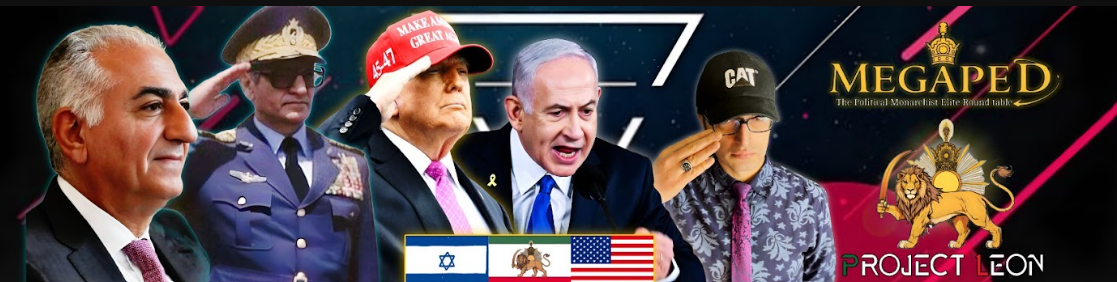

▶ Original broadcast in Farsi — English auto-generated subtitles enabled by default.
Watch on YouTube
Recent developments in the Middle East underscore a volatile and rapidly shifting strategic landscape. Israel’s unprecedented aerial maneuvers over Iranian airspace signal a bold escalation, while missile attacks by the Iranian regime targeting Saudi Arabia’s strategic waterways further destabilize the region. Against this backdrop, the enduring influence of former US President Donald Trump and Israeli Prime Minister Benjamin Netanyahu shapes the unfolding ninth war against the Iranian regime’s expansionist ambitions.
The Strategic Context
The Middle East remains a crucible of geopolitical competition, with Iran at the center of regional tension. Iran’s aggressive posture, evidenced by missile strikes on Saudi Arabia and control over critical chokepoints such as the Strait of Hormuz, challenges the security calculus of Gulf states and their Western allies. Israel, long wary of Tehran’s nuclear ambitions and proxy networks, has escalated its military signaling through aerial maneuvers reportedly conducted over Iranian airspace, reflecting a readiness to confront Iranian threats directly. Concurrently, the political synergy between Donald Trump and Benjamin Netanyahu—both staunch opponents of the Islamic Republic—continues to influence US-Israel strategic coordination aimed at curbing Iran’s regional influence.
Israel’s Aerial Maneuvers and Iran’s Missile Offensives
Israel’s recent aerial exercises over Iran represent a significant shift in operational boldness. These maneuvers serve multiple strategic purposes: demonstrating Israeli air superiority, gathering intelligence on Iranian air defenses, and signaling deterrence without immediate kinetic engagement. Such actions underscore Israel’s intent to preemptively disrupt Iranian military capabilities, particularly its missile infrastructure. Conversely, Iran’s missile attacks on Saudi Arabia’s critical oil transit routes and the Strait of Hormuz exemplify Tehran’s asymmetric strategy to leverage regional vulnerabilities and exert pressure on Gulf states allied with the West and Israel. This tit-for-tat escalation raises the specter of broader conflict, with critical maritime chokepoints at risk and global energy markets destabilized.
What This Means
The convergence of Israeli military assertiveness and Iranian missile provocations portends an intensification of conflict dynamics in the Middle East. The strategic calculus for regional and global powers becomes increasingly complex as the risk of miscalculation grows. Israel’s direct actions signal a readiness to contain Iran militarily, while Iran’s missile strikes aim to deter Israeli and Saudi aggression by raising the costs of confrontation. This delicate balance, influenced by enduring US-Israel political coordination under figures like Trump and Netanyahu, sets the stage for a protracted ninth phase of conflict with the Iranian regime, underscoring the persistent threat Tehran poses to regional stability and international security.
Leon’s Assessment
From an analytical standpoint, Israel’s maneuvers over Iran are not mere posturing but a calculated escalation designed to impose strategic constraints on Tehran’s military ambitions. The Iranian missile strikes, while bold, reflect desperation to project power amid growing internal and external pressures. The Trump-Netanyahu axis continues to shape this conflict’s trajectory, advocating a hardline approach that rejects appeasement and prioritizes regime change or containment. Ultimately, this ninth war with the regime is emblematic of a broader ideological and geopolitical struggle where Israel and its allies seek to thwart Iran’s hegemonic designs. The stakes are high, and only decisive, coordinated action grounded in robust intelligence and strategic patience can secure a more stable Middle East future.
Leon is the founder and lead analyst of ProjectLeon International, specializing in Iranian geopolitics, the US-Israel-Iran strategic triangle, and the Iranian monarchist movement.