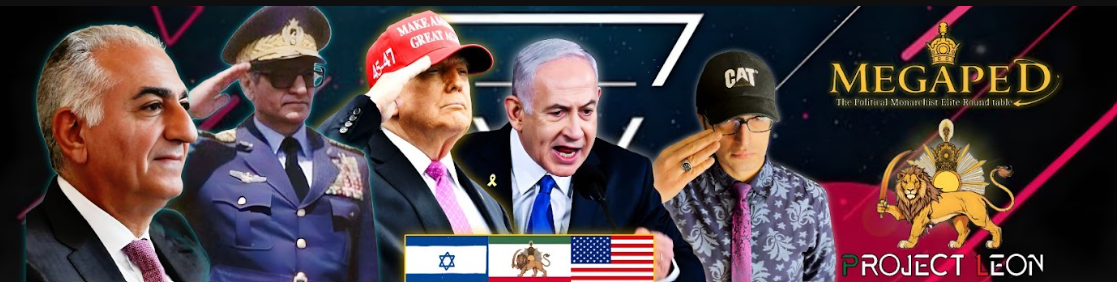

▶ Original broadcast in Farsi — English auto-generated subtitles enabled by default.
Watch on YouTube
Recent developments within the US-Israel-Iran strategic triangle signal a pivotal moment. A growing rift between former Prime Minister Netanyahu and Donald Trump, combined with the appointment of a new Mossad chief, has accelerated preparations for what appears to be an imminent third conflict targeting the Iranian regime. Israel’s decision to arm Iranian resistance forces marks a significant escalation with profound regional implications.
The Strategic Context
The Middle East remains a volatile arena where the contest between Israel and the Iranian regime shapes broader geopolitical dynamics. The Trump administration’s policies, though contentious, significantly influenced Israel’s strategic calculus regarding Iran. However, fissures within the US-Israel alliance, particularly between Netanyahu and Trump, have complicated coordination efforts. Meanwhile, Israel has appointed a new Mossad chief who embodies a more aggressive stance toward Tehran, signaling a readiness to intensify covert and overt operations aimed at destabilizing the Islamic Republic. This shift comes amid accelerating unrest within Iran and growing support for opposition movements.
Israel’s Strategic Shift: Arming Iranian Resistance and Preparing for Regime Collapse
The appointment of the new Mossad chief reflects a strategic recalibration. Moving beyond intelligence gathering, Israeli covert operations now actively include arming and supporting Iranian resistance groups inside Iran. This marks a departure from previous policies that primarily focused on containment and targeted strikes. The new approach anticipates a possible regime collapse or forced political transition in Tehran, leveraging internal dissent as a force multiplier. Concurrently, the discord between Netanyahu and Trump—both key figures in shaping Israel’s Iran policy—has introduced complexities but also opportunities for maneuvering within Washington and Jerusalem. The prospect of a third war involving Iran is no longer theoretical but increasingly operational, underscoring the urgency Israel places on dismantling Iran’s nuclear and regional ambitions.
What This Means
This confluence of leadership change within Mossad, heightened Israeli support for Iranian dissidents, and the fracturing of pro-Trump Israeli political unity presages a new phase of confrontation. The Iranian regime faces unprecedented internal and external pressures that threaten its stability. For the international community, this escalation raises the stakes for regional security and complicates diplomatic efforts aimed at de-escalation. The arming of resistance groups signals that Israel is betting on internal regime change as a viable strategy, which risks drawing the region into broader conflict with unpredictable consequences.
Leon’s Assessment
From my analysis, Israel’s strategic posture is entering a decisive phase. The new Mossad chief’s readiness to arm Iranian resistance fighters is a clear indication that Israel no longer sees containment as sufficient. The internal discord between Netanyahu and Trump, while problematic, could inadvertently catalyze a more dynamic and multi-faceted approach to weakening the Iranian regime. This approach aligns with the aspirations of the Iranian pro-democracy opposition and the monarchist movement, who seek external support to challenge the clerical regime’s grip on power. However, this strategy requires careful calibration to avoid triggering a full-scale war that could destabilize the entire Middle East. The coming months will be crucial in determining whether these efforts precipitate a peaceful transition or a broader conflagration.
Leon is the founder and lead analyst of ProjectLeon International, specializing in Iranian geopolitics, the US-Israel-Iran strategic triangle, and the Iranian monarchist movement.