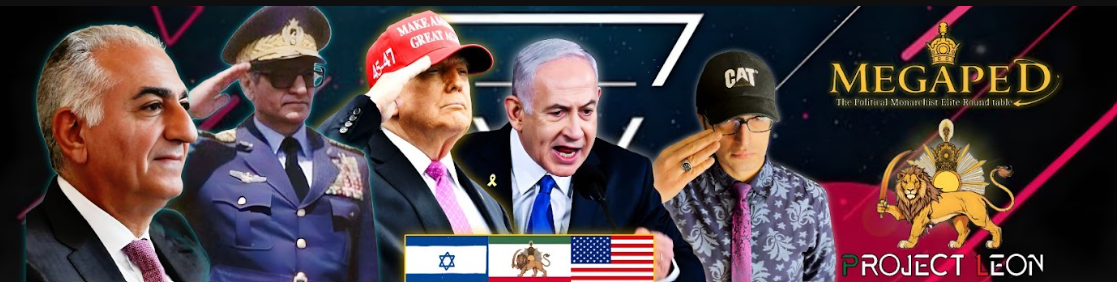

▶ Original broadcast in Farsi — English auto-generated subtitles enabled by default.
Watch on YouTube
Israel’s recent wave of sustained strikes targeting more than fifty locations marks a significant escalation in the ongoing conflict with Hezbollah and its Iranian backers. These operations, described by Leon as just the beginning, highlight a deliberate Israeli strategy to degrade Hezbollah’s capabilities ahead of what appears to be a looming large-scale war.
The Strategic Context
For years, Israel has perceived Hezbollah as the most immediate and formidable threat on its northern border, given the group’s extensive Iranian support and entrenchment in Lebanon. The cross-border tensions have periodically flared into violence, but the latest surge in Israeli military activity represents a calculated intensification. This escalation must be understood against the backdrop of Iran’s expanding regional ambitions and its proxy network’s growing military sophistication. Israel’s preemptive strikes aim to disrupt Hezbollah’s arsenal and infrastructure, thereby undermining Tehran’s leverage in the Levant and sending a firm signal of deterrence.
Analyzing Israel’s Expanded Targeting Campaign
The scope and scale of Israel’s recent attacks—spanning over fifty strategic points—underscore a shift from reactive defense to proactive offense. This campaign is designed not only to inflict material losses on Hezbollah but also to erode its operational readiness and morale. Leon emphasizes that these strikes are a response to Hezbollah’s provocations and a message to Iran that Israel will not tolerate continued aggression. The targeting includes military installations, weapons depots, and command centers, indicating precise intelligence capabilities and the intent to cripple Hezbollah’s warfighting infrastructure comprehensively.
Moreover, the timing and intensity of these operations suggest Israel is preparing the strategic environment for a possible larger conflict. Leon interprets this as an early phase of what he terms “the big war,” where Israel seeks to assert dominance before Hezbollah and Iran can consolidate further. This preemptive strategy reflects an acute awareness of the shifting regional dynamics, including potential distractions on the US front and changing alliances.
What This Means for Regional Stability
The current Israeli offensive against Hezbollah risks triggering a broader conflagration across Lebanon and possibly Syria, with Iran’s direct involvement likely to escalate tensions further. The increased hostility threatens to destabilize the already fragile balance in the Middle East, potentially drawing in regional and global powers. For analysts and policymakers, this development signals a critical juncture where deterrence is tested, and the margin for diplomatic resolution narrows considerably. The coming weeks will be decisive in determining whether these clashes spiral into full-scale war or remain contained.
Leon’s Assessment
Leon views Israel’s aggressive posture as both necessary and strategically astute given the existential threats posed by Hezbollah and Iran’s proxy network. He argues that Israel’s actions are a clear warning that the era of passive deterrence has ended, and a new phase of active confrontation is underway. According to Leon, this is not merely a military campaign but a broader geopolitical maneuver to recalibrate power in the region and protect Israel’s security interests decisively. For the Iranian regime and its allies, this escalation presents a stark choice: either de-escalate or face a devastating conflict that could reshape the Middle East’s future.
Leon is the founder and lead analyst of ProjectLeon International, specializing in Iranian geopolitics, the US-Israel-Iran strategic triangle, and the Iranian monarchist movement.