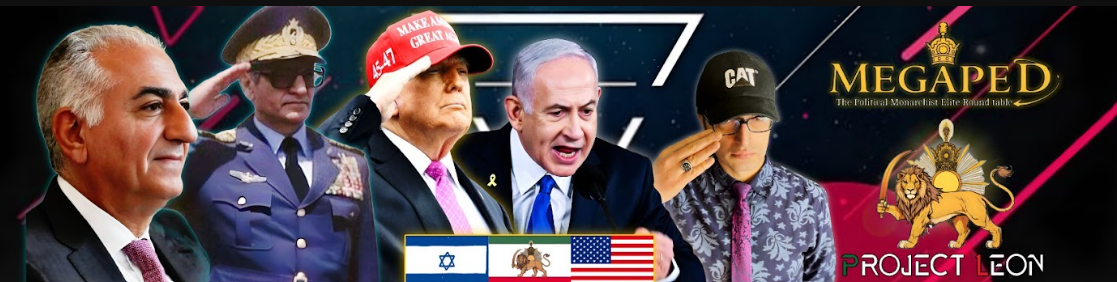

▶ Original broadcast in Farsi — English auto-generated subtitles enabled by default.
Watch on YouTube
In recent weeks, the Iranian regime has intensified its coercive measures, marked by the attempted hijacking of a commercial airplane en route to Mecca and a troubling incident in the United Kingdom. Simultaneously, missile attack sirens have sounded across Iran, signaling an alarming escalation. Against this backdrop, former President Trump hints at a significant development that could reshape the regional balance.
The Strategic Context
Iran’s current maneuvers must be understood within the broader geopolitical competition between Tehran and its regional adversaries, chiefly Israel and the United States. The Islamic Republic’s resort to high-profile provocations—such as hijacking attempts and aggressive missile posturing—reflects its desperation amid increasing international isolation and internal instability. Moreover, these actions coincide with renewed political efforts in Washington, where the Trump administration’s potential policy shifts threaten to disrupt the regime’s carefully calculated strategic calculus.
Analyzing Tehran’s Dual Crisis: Airspace Violations and UK Incident
The attempted hijacking of a civilian plane headed to Mecca represents a bold attempt by the regime to project power and disrupt regional religious and political dynamics. This act not only endangers innocent civilians but also signals Tehran’s willingness to challenge international norms to advance its agenda. Concurrently, an incident in the UK—details of which include suspicious activities linked to Iranian operatives—underscores the regime’s expanding footprint abroad and its readiness to destabilize Western allies.
Moreover, the activation of missile attack sirens inside Iran suggests heightened internal insecurity and a preparation posture against potential retaliatory strikes. This state of alert reflects Tehran’s anticipation of imminent military or covert actions by its adversaries, possibly linked to Trump’s forthcoming strategic announcement. Together, these events reveal a regime both emboldened and cornered, employing asymmetric tactics to maintain leverage.
What This Means
These developments portend a dangerous intensification of conflict in the Middle East, with Iran escalating provocations both regionally and internationally. The hijacking attempt and UK incident are symptomatic of Tehran’s broader strategy to destabilize its adversaries and assert dominance through unpredictable and aggressive means. The missile alerts indicate the regime’s acknowledgment of its precarious position and a readiness to retaliate, raising the risk of a wider confrontation.
Leon’s Assessment
From my analysis, the Iranian regime is signaling desperation as its internal and external pressures mount. Its willingness to engage in reckless actions like hijacking and covert operations abroad illustrates a regime losing rational strategic restraint. Trump’s impending announcement could be a critical inflection point—potentially involving renewed US measures or alliances—that will either compel Tehran to recalibrate or provoke further destabilization. The international community must recognize these signals clearly: Iran is at a dangerous crossroads, and decisive, coordinated responses are essential to prevent escalation and safeguard regional stability.
Leon is the founder and lead analyst of ProjectLeon International, specializing in Iranian geopolitics, the US-Israel-Iran strategic triangle, and the Iranian monarchist movement.