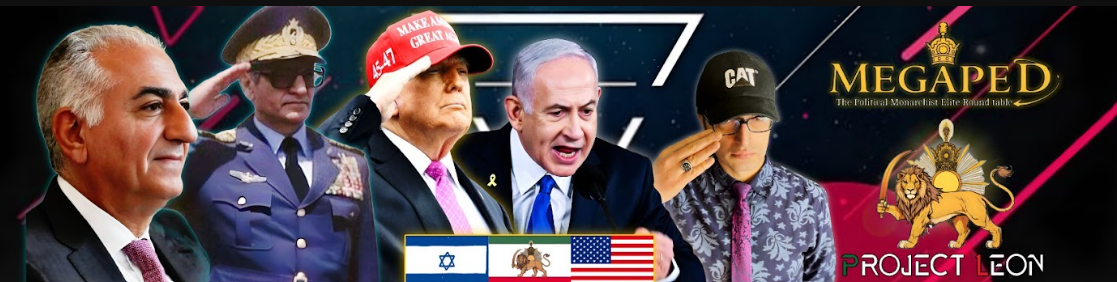

▶ Original broadcast in Farsi — English auto-generated subtitles enabled by default.
Watch on YouTube
The recent G20 summit has revealed unexpected concessions from authoritarian regimes, signaling a potential shift in global alignments. Concurrently, Poland is experiencing a leftist political upheaval, while coordinated attacks on dozens of fast boats in regional waters underscore rising maritime tensions. These developments collectively hint at a reconfiguration of power dynamics both in Europe and the Middle East.
The Strategic Context
The 2026 G20 summit unfolded amid mounting geopolitical pressures, with authoritarian regimes facing increasing isolation due to their domestic policies and regional aggression. Poland’s political landscape is undergoing rapid transformation as a leftist faction gains ground, challenging the post-Cold War conservative order. Meanwhile, the Middle East continues to witness asymmetric maritime confrontations, particularly targeting fast-attack crafts that have been instrumental in proxy conflicts and regional power projection.
G20 Summit Final Decisions and Poland’s Leftist Coup
The summit’s final communique, described by Leon as the regime ‘surrendering,’ indicates subtle but significant concessions by entrenched authoritarian states. These concessions suggest an acknowledgment of shifting global priorities, including economic cooperation over ideological rigidity. In Poland, the emergence of a leftist coup marks a dramatic pivot from its traditionally conservative, NATO-aligned government. This political upheaval threatens to alter the balance within the EU and NATO, potentially weakening Western cohesion in the face of Eastern authoritarian resurgence.
Coordinated Attacks on Fast Boats: Maritime Tensions Escalate
Simultaneously, the reported attacks on dozens of fast boats—vessels often used by Iran-aligned militias and proxies—signal an intensified effort to control strategic maritime corridors. These assaults disrupt Iran’s capability to project power through asymmetric naval means and complicate Tehran’s efforts to challenge Israeli and Gulf state maritime security. This escalation is emblematic of the broader contest for dominance in the Persian Gulf and Red Sea, where control over shipping lanes remains a critical strategic objective.
What This Means
The convergence of these developments reflects an evolving geopolitical landscape where authoritarian regimes are recalibrating strategies in response to international pressure and internal dissent. Poland’s political shift could weaken NATO’s eastern flank, complicating Western responses to Russian and Chinese assertiveness. Meanwhile, maritime confrontations underscore the fragility of regional security architectures in the Middle East, with Israel and its allies needing to remain vigilant against hybrid threats that exploit maritime vulnerabilities.
Leon’s Assessment
From Leon’s perspective, the G20 summit’s apparent regime concessions are less a sign of genuine reform and more a tactical retreat aimed at preserving regime longevity amid mounting external and internal pressures. Poland’s leftist coup represents a strategic vulnerability for the West, potentially opening avenues for Russian influence in Central Europe. The attacks on fast boats demonstrate ongoing efforts to undermine Iran’s asymmetric naval capabilities, reinforcing the necessity for proactive Israeli and allied maritime security measures. Collectively, these events highlight a period of flux that demands nuanced analysis and decisive policy responses from pro-democracy and pro-Israel actors in the international arena.
Leon is the founder and lead analyst of ProjectLeon International, specializing in Iranian geopolitics, the US-Israel-Iran strategic triangle, and the Iranian monarchist movement.