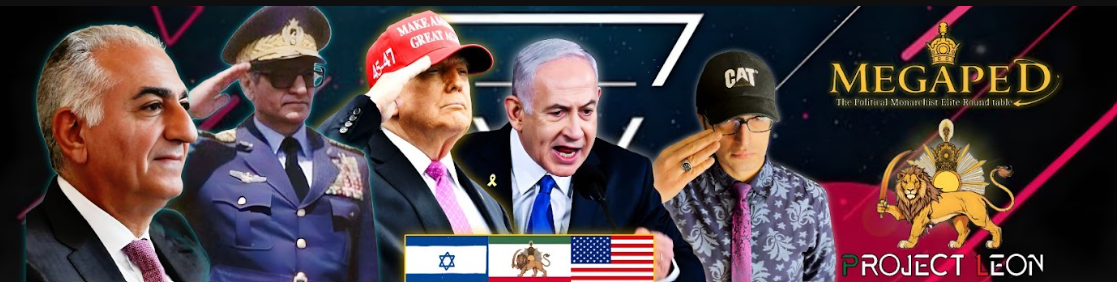

▶ Original broadcast in Farsi — English auto-generated subtitles enabled by default.
Watch on YouTube
Benjamin Netanyahu’s recent visit to the White House signals a pivotal moment in US-Israel strategic coordination amid the escalating regional tensions involving Iran. Simultaneously, Ukraine’s emerging involvement in the anti-regime coalition and Iran’s deepening domestic crisis over fuel shortages underscore a complex geopolitical and internal dynamic that demands close scrutiny.
The Strategic Context
The intersection of US-Israel relations, the ongoing Iranian regime’s instability, and the broader Middle East security environment creates a multifaceted strategic landscape. Netanyahu’s engagement with the Biden administration comes at a time when Washington seeks to reaffirm its commitment to Israel’s security while recalibrating its Iran policy under the shadow of Ukraine’s conflict with Russia. Iran, under severe economic and political strain, faces internal upheaval exacerbated by critical fuel shortages, raising the stakes for both domestic stability and regional influence.
Netanyahu’s White House Visit and Ukraine’s Role in the Anti-Regime Front
Netanyahu’s diplomatic engagement in Washington is more than routine; it reflects an intensified US-Israel coordination to counter Iran’s regional ambitions. The visit coincides with a notable shift in Ukraine’s position, as Kyiv appears to be increasingly aligning with the anti-Iran regime coalition, potentially opening a new front in the geopolitical struggle. This alignment is significant given Ukraine’s own conflict with Russia and its implications for global power balances. Meanwhile, the Iranian regime’s internal vulnerabilities are starkly exposed by a growing fuel crisis, which not only fuels public discontent but also hampers the regime’s operational capacity.
The emergence of an Iranian government-in-exile receiving support from the Trump camp adds another layer of complexity. This development highlights a transnational opposition movement gaining traction, leveraging both international discontent and diaspora activism to challenge the regime’s legitimacy. The convergence of these factors—Netanyahu’s strategic dialogue with the US, Ukraine’s entry into the anti-regime coalition, and Iran’s domestic fuel crisis—signals a potential recalibration of regional power dynamics.
What This Means
The convergence of these events suggests a tightening noose around the Iranian regime, both externally through coordinated international pressure and internally through socio-economic destabilization. Netanyahu’s visit underscores Israel’s proactive approach to securing US backing amid these tensions, while Ukraine’s alignment introduces new geopolitical complexities. Iran’s fuel crisis reveals the regime’s fragility and the potential for increased unrest, which could accelerate calls for regime change or reform. The backing of opposition groups in exile further challenges Tehran’s grip on power, indicating that the regime faces multifront pressures unlikely to abate soon.
Leon’s Assessment
From my perspective, Netanyahu’s engagement with the White House is a clear signal that Israel and the US are intensifying their strategic partnership against the Iranian threat, adapting to new geopolitical realities shaped by the Ukraine conflict and Iran’s internal vulnerabilities. Ukraine’s pivot to support anti-regime efforts in Iran is a nuanced but critical development, reflecting broader shifts in international alliances against authoritarian regimes. The Iranian fuel shortage crisis is not merely a logistical failure but a symptom of systemic collapse, which, combined with rising exile government activism and external pressures, may catalyze significant change in Tehran. The regime is at a crossroads, facing unprecedented internal and external challenges that could redefine the region’s future.
Leon is the founder and lead analyst of ProjectLeon International, specializing in Iranian geopolitics, the US-Israel-Iran strategic triangle, and the Iranian monarchist movement.