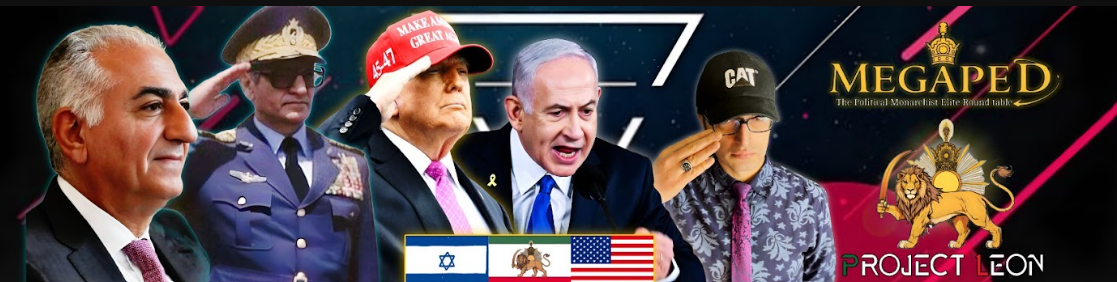

▶ Original broadcast in Farsi — English auto-generated subtitles enabled by default.
Watch on YouTube
In the volatile lead-up to the 2026 U.S. elections, the Middle East is witnessing a complex and dangerous convergence of political and military events. Iranian regime officials are reportedly fleeing the country, signaling internal instability; meanwhile, former President Donald Trump’s rhetoric suggests an impending war designed to influence the elections. Israel, for its part, has mobilized forces in response to an unusual attack on the Houthi movement, underscoring the region’s escalating tensions.
The Strategic Context
The Middle East’s geopolitical landscape remains precariously balanced, shaped by the interplay between Iran’s fragile regime, U.S. electoral politics, and Israel’s security imperatives. Iran’s regime faces mounting internal pressures, both from economic hardship and popular dissent, which are increasingly driving its leadership to take desperate measures, including flight. Concurrently, U.S. political dynamics under Trump’s shadow cast a long influence, as his hawkish approach to Iran and the broader region signals a possible escalation before the November elections. Israel’s recent military deployments and its reaction to the Houthi attacks reveal a strategic calculus aimed at preempting threats and asserting dominance in a region rife with proxy conflicts.
Regime Flight, Trump’s War Message, and Israel’s Military Escalation
Reports of Iranian officials fleeing the country highlight the regime’s growing insecurity amid intensifying domestic unrest. This exodus reflects both fear of internal reprisals and anticipation of external consequences, particularly as international pressure mounts. Against this backdrop, Trump’s public statements are critical: he frames the coming conflict with Iran as an electoral strategy, effectively weaponizing war rhetoric to galvanize his base and influence voter sentiment. This calculated messaging raises the stakes for regional actors, as it signals a potential U.S. military engagement tied closely to domestic American politics.
Simultaneously, Israel’s recent mobilization—described as a ‘marching army’—in response to a peculiar attack on the Houthi rebels in Yemen underscores Jerusalem’s proactive stance towards Iranian proxies. The attack’s unusual nature suggests an escalation in proxy warfare dynamics, compelling Israel to reinforce its regional posture. Israel’s actions indicate a desire not only to defend its interests but to preemptively disrupt Iranian expansion through its affiliates, maintaining strategic superiority in a fracturing Middle East environment.
What This Means
The convergence of these developments portends a heightened risk of conflict just before the U.S. elections, with implications that extend beyond immediate military engagements. Iran’s internal instability could precipitate regime collapse or intensify repression, while Trump’s war rhetoric risks drawing the U.S. into a pre-election confrontation that may destabilize the region further. Israel’s assertive military posture serves as both a deterrent and a catalyst for escalating proxy conflicts, complicating efforts toward regional stability. The interplay between these forces underscores the fragile and interconnected nature of Middle Eastern geopolitics at this critical juncture.
Leon’s Assessment
From my analysis, the Iranian regime’s flight is a clear indicator of a regime on the brink, unable to contain internal dissent or reconcile with the mounting external pressures. Trump’s timing in framing war as an electoral strategy is a dangerous gamble that risks conflating domestic political objectives with international security imperatives, potentially drawing the U.S. into a conflict it is unprepared for. Israel’s military escalation, while necessary from a security standpoint, further entrenches the cycle of proxy conflicts, making a diplomatic resolution increasingly elusive. The coming months will be decisive: the interplay between Iran’s internal fracture, U.S. political ambitions, and Israel’s regional actions will shape the future trajectory of Middle East stability and the prospects for democracy and security in the region.
Leon is the founder and lead analyst of ProjectLeon International, specializing in Iranian geopolitics, the US-Israel-Iran strategic triangle, and the Iranian monarchist movement.