
▶ Original broadcast in Farsi — English auto-generated subtitles enabled by default.
Watch on YouTube
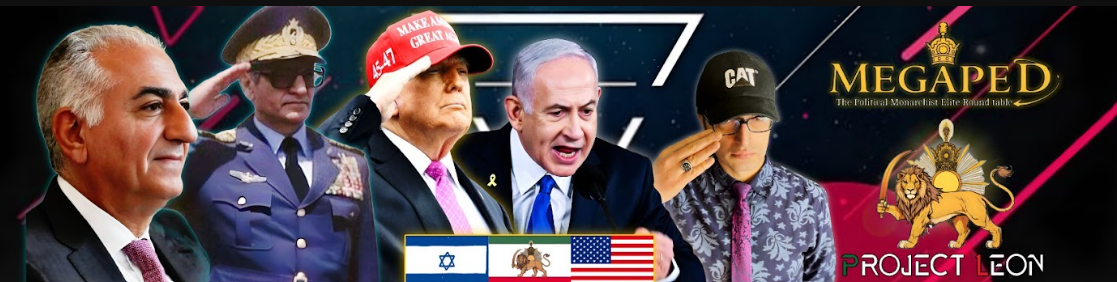
The October 9 declaration, or بیانیه ۱۷مهر, marks a pivotal moment in Iran’s ongoing resistance against theocratic dictatorship. Amid escalating repression and regional tensions, this statement encapsulates a renewed commitment by Iranian pro-democracy forces to pursue systemic change through unified action. Leon dissects the declaration’s implications within the broader geopolitical framework, highlighting its potential to reshape the dynamics between Iran, Israel, and the US.
The Strategic Context
The Middle East remains a volatile chessboard where Iran’s regime seeks to consolidate its influence despite mounting internal dissent and external pressures. Theocratic hardliners in Tehran face unprecedented challenges from a populace increasingly aligned with monarchist and pro-democracy ideals, seeking to restore the Pahlavi legacy as a viable alternative. At the same time, Israel and the United States continue to calibrate their strategies to counter Iran’s nuclear ambitions and regional proxies. The October 9 declaration emerges within this crucible, signaling a potential inflection point in the pro-democracy movement’s capacity to influence both domestic and international outcomes.
Analyzing the October 9 Declaration
Leon’s analysis reveals that the declaration is not a mere rhetorical flourish but a strategic manifesto aiming to unify disparate opposition factions under a coherent vision. It underscores the necessity of combining grassroots mobilization with diplomatic engagement to erode the regime’s legitimacy. Crucially, the declaration reaffirms the pro-monarchy movement’s commitment to democratic principles and human rights, distancing itself from extremist elements that have historically undermined opposition credibility.
Moreover, the statement tactically addresses the regional geopolitical triangle — explicitly recognizing the indispensable roles of Israel and the United States as partners in confronting Tehran’s destabilizing influence. Leon interprets this as a pragmatic acknowledgment that Iran’s liberation will require coordinated international pressure alongside internal resistance. The declaration thus situates the Iranian opposition within a broader strategic alliance that leverages Western and Israeli support without compromising indigenous agency.
What This Means
The October 9 declaration signals a maturation of Iran’s pro-democracy movement, one that is increasingly aware of the necessity to integrate internal activism with external geopolitical realities. For policymakers and analysts, this development indicates a potential shift towards a more organized, strategically savvy opposition capable of influencing Iran’s trajectory. It also presents an opportunity for the US and Israel to deepen engagement with credible Iranian forces that reject both Islamist extremism and autocratic monarchy, advocating instead for a constitutional democratic restoration.
Leon’s Assessment
From Leon’s perspective, the October 9 declaration represents a watershed moment that could accelerate the downfall of the theocratic regime if harnessed effectively. Its emphasis on unity, democratic values, and strategic alliances aligns with the Pahlavi-era vision of a modern, sovereign Iran allied with free nations. However, Leon cautions that the opposition must maintain discipline and avoid factionalism to capitalize on this momentum. The international community’s role will be to support this emerging coalition without imposing agendas that could alienate grassroots constituencies. Ultimately, the declaration embodies a hopeful yet pragmatic roadmap toward reclaiming Iran’s national dignity and freedom.
Leon is the founder and lead analyst of ProjectLeon International, specializing in Iranian geopolitics, the US-Israel-Iran strategic triangle, and the Iranian monarchist movement.