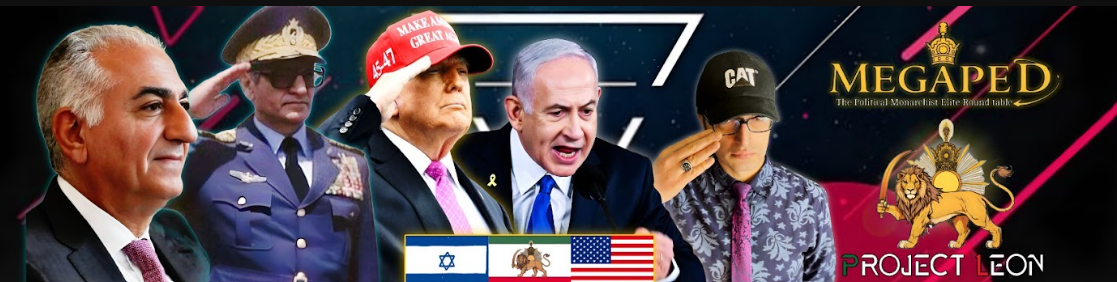

▶ Original broadcast in Farsi — English auto-generated subtitles enabled by default.
Watch on YouTube
In a dramatic turn reflecting escalating regional tensions, former President Donald Trump reportedly issued an immediate alert to the Pentagon, signaling heightened US military readiness. Concurrently, a rare coordinated offensive involving five countries against the Houthi movement in Yemen has unfolded, while political uncertainty deepens in Israel with potential delays to national elections. These developments underscore the fragile and intricate strategic environment in the Middle East.
The Strategic Context
The Middle East remains a volatile theater where local conflicts intertwine with great power dynamics and regional rivalries. The Houthi insurgency in Yemen, backed indirectly by Iran, has long posed a security challenge to Saudi Arabia and its Gulf allies. Meanwhile, Israel’s internal political stability is critical not only for its domestic agenda but also for its posture toward Iran and broader regional security. Against this backdrop, the United States maintains a vested interest in managing escalation risks, particularly given its strategic partnership with Israel and Gulf states. The recent developments, including Trump’s unexpected high-level alert, signal a potential recalibration of US posture amid these intersecting crises.
Simultaneous Multinational Offensive Against the Houthis
The coordinated strikes launched by five countries against the Houthis represent a significant escalation in the Yemen conflict. This rare multinational cooperation highlights the growing intolerance among Gulf states and their allies toward Iranian proxy activity destabilizing the region. The timing and scale of these attacks suggest a concerted effort to degrade Houthi capabilities and send a clear message to Tehran about the costs of its regional interventions. This operation also reflects a strategic convergence of interests, whereby regional actors are willing to synchronize military actions to counterbalance Iran’s expanding influence through asymmetric warfare.
Concurrently, the uncertainty surrounding Israel’s upcoming elections introduces an additional layer of complexity. Delays in the electoral process could weaken the current government’s mandate, potentially limiting Israel’s ability to respond decisively to regional threats including from Iran-backed groups and hostile neighbors. This political unpredictability could embolden adversaries and complicate US-Israel strategic coordination at a critical juncture.
What This Means
The convergence of heightened US military alertness, a large-scale multinational campaign against the Houthis, and political instability in Israel signals a precarious phase in Middle East geopolitics. It reflects a broader struggle over influence and security in a region where proxy conflicts and political volatility can rapidly escalate into wide-ranging confrontations. The United States’ apparent readiness to respond swiftly underscores the enduring significance of maintaining deterrence against Iranian expansionism and protecting allied interests. For Israel, political uncertainty may constrain strategic decision-making, potentially impacting its ability to counter threats effectively.
Leon’s Assessment
From my analysis, these developments illustrate that the regional power balance is at a critical inflection point. Trump’s direct alert to the Pentagon—despite no longer holding office—reveals the enduring influence of his strategic instincts and the gravity of the situation as perceived by pro-American actors. The multinational offensive against the Houthis is a clear signal that Gulf states are moving toward more proactive and coordinated measures to check Iran’s proxies. However, Israel’s electoral uncertainty could undermine the cohesive front needed to confront these challenges decisively. Thus, the coming months will be pivotal in determining whether these tensions spiral into broader conflict or if diplomatic and strategic recalibrations can restore relative stability. ProjectLeon will continue monitoring these dynamics closely, providing in-depth analysis from a pro-democracy and pro-Israel perspective.
Leon is the founder and lead analyst of ProjectLeon International, specializing in Iranian geopolitics, the US-Israel-Iran strategic triangle, and the Iranian monarchist movement.