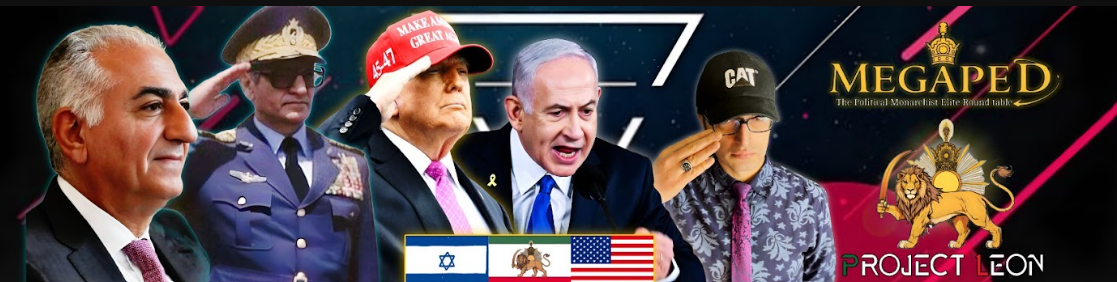

▶ Original broadcast in Farsi — English auto-generated subtitles enabled by default.
Watch on YouTube
The announcement by Israeli Prime Minister Benjamin Netanyahu regarding a hardline stance toward Iran has coincided with a significant and unmistakable deployment of US naval forces to the Persian Gulf. This confluence of political and military signals marks a critical inflection point in the growing strategic confrontation between Washington, Tel Aviv, and Tehran.
The Strategic Context
Since the collapse of the JCPOA and Iran’s accelerating nuclear ambitions, the US-Israel-Iran dynamic has been characterized by escalating provocations and mutual signaling. The recent public declaration by Netanyahu, interpreted as a de facto declaration of war rhetoric against the Iranian regime, has underscored Tel Aviv’s intensified pressure on Washington to adopt a more aggressive policy posture. Concurrently, the US Navy has dispatched multiple war fleets into the region, signaling a readiness to escalate military operations, if necessary. This deployment occurs amid heightened Iranian Revolutionary Guard Corps (IRGC) activities and evolving proxy conflicts, further complicating an already volatile regional security environment.
Decoding the Latest Military Movements and War Codes
Leon emphasizes that the US naval deployments are not merely routine rotations but constitute a strategic “end-times” escalation designed to communicate resolve and deterrence. The positioning of carrier strike groups and amphibious assault ships near the Persian Gulf serves multiple purposes: deterring Iranian aggression, reassuring regional allies, and preparing for potential kinetic operations. Moreover, there are newly observed coded communications and operational directives within US and allied forces that suggest a shift from defensive posturing to offensive contingency planning. The Iranian regime’s internal communications, as interpreted by ProjectLeon’s intelligence sources, indicate confusion and attempts to recalibrate their strategic calculus amid these provocations.
What This Means
The convergence of Netanyahu’s aggressive rhetoric and the US naval escalation marks a dangerous threshold. The risk of miscalculation or inadvertent conflict has increased significantly. Tehran faces mounting pressure both externally and internally, with the IRGC potentially poised to respond asymmetrically through proxy militias or direct action. For Israel, this moment represents a strategic gamble to compel decisive US military intervention or to justify unilateral operations against Iranian nuclear infrastructure. For the broader Middle East, this intensification threatens to destabilize an already fragile balance, potentially drawing in regional and global powers.
Leon’s Assessment
From ProjectLeon’s perspective, the current trajectory reflects a deliberate push by Israel and the US military establishment to corner the Iranian regime and force a decisive outcome. However, this strategy carries significant risks of escalation beyond controlled parameters. The deployment of “end-times” naval fleets and coded war signals suggests preparation for high-intensity conflict, but it also reveals underlying uncertainties within Washington and Tel Aviv about the regime’s likely responses. Ultimately, this moment underscores the urgent need for clear strategic clarity and communication channels to avoid unintended war. The pro-democracy movement inside Iran stands at a critical juncture, and external pressures must be carefully calibrated to support regime change without catastrophic regional warfare.
Leon is the founder and lead analyst of ProjectLeon International, specializing in Iranian geopolitics, the US-Israel-Iran strategic triangle, and the Iranian monarchist movement.