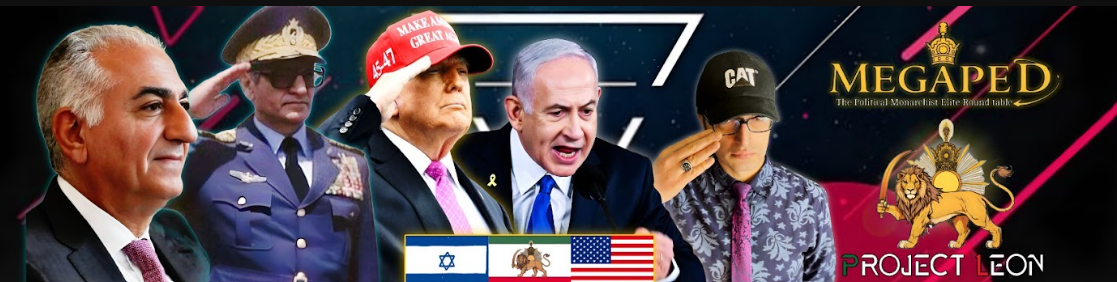

▶ Original broadcast in Farsi — English auto-generated subtitles enabled by default.
Watch on YouTube
The volatile environment surrounding Iran’s regime is reaching a critical juncture. With mounting accusations from former U.S. President Donald Trump and Israeli Prime Minister Benjamin Netanyahu branding the regime as responsible for the hijacking of an aircraft, the prospect of a ground incursion edges closer to reality. This convergence of rhetoric and action signals a decisive moment in the ongoing confrontation between the Iran regime and its adversaries.
The Strategic Context
The geopolitical landscape in the Middle East remains fraught with tension, underscored by the persistent hostility between Iran’s ruling regime and the U.S.-Israel alliance. Over recent years, covert and overt operations have targeted Iran’s regional influence and nuclear ambitions. In this heightened phase, the regime’s destabilizing actions—such as hijacking aircraft—have galvanized international condemnation and provided a pretext for escalated measures. The strategic calculus now encompasses not only aerial and cyber confrontations but also the possibility of direct ground engagement, which would represent a significant escalation in the confrontation.
Escalation Signals: Ground Operations and Political Rhetoric
The recent statements from Trump and Netanyahu, labeling the regime as the hijacker, are far from mere political posturing. These declarations serve a dual purpose: they delegitimize the regime’s international standing and lay the groundwork for justifying intensified military action. Leon’s analysis interprets this as a carefully calibrated signal indicating that a ground operation against the regime’s leadership and infrastructure is imminent. The rhetoric about “exploding the regime’s leaders” is emblematic of a strategy aimed at decapitating the regime’s command structure to induce systemic collapse.
This impending operation would likely target critical regime strongholds and command centers, leveraging intelligence gathered through years of sanctions, espionage, and proxy conflicts. The timing also corresponds with internal pressures within Iran, where the regime faces growing dissent and economic strain, suggesting that external military pressure could exacerbate internal fractures.
What This Means
A ground incursion into Iranian territory would mark a pivotal shift from previous containment and sanction strategies to active regime destabilization. Such an operation risks broadening the conflict but could expedite the downfall of the regime if executed with precision and robust international backing. The move also signals to regional and global actors that the U.S.-Israel alliance is prepared to escalate beyond diplomatic and covert means, fundamentally altering the strategic landscape in the Middle East.
Leon’s Assessment
From Leon’s perspective, this phase represents a critical window for pro-democracy forces and international supporters of a free Iran. The convergence of U.S. and Israeli resolve, coupled with the regime’s internal vulnerabilities, creates an unprecedented opportunity to accelerate the regime’s collapse. However, the risks of escalation must be managed carefully to avoid a protracted conflict that could destabilize the broader region. Leon advocates for a strategy that combines decisive military action with robust political and informational campaigns to empower the Iranian people and pave the way for a democratic and Pahlavi-aligned future.
Leon is the founder and lead analyst of ProjectLeon International, specializing in Iranian geopolitics, the US-Israel-Iran strategic triangle, and the Iranian monarchist movement.