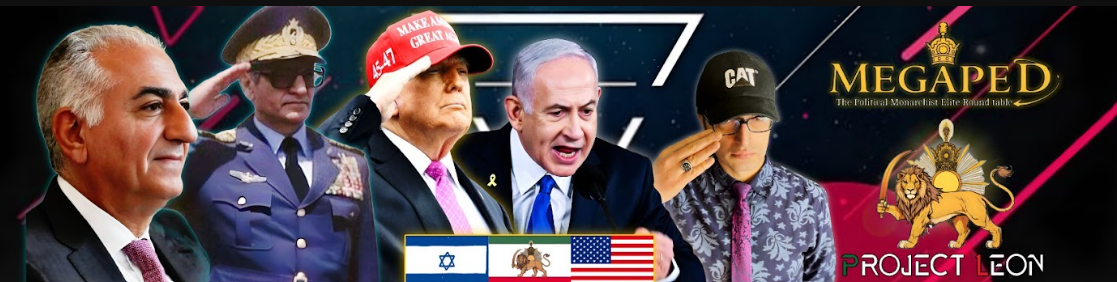

▶ Original broadcast in Farsi — English auto-generated subtitles enabled by default.
Watch on YouTube
Recent developments reveal a clandestine summit orchestrated by former President Donald Trump alongside key regional leaders, signaling a renewed and unified offensive against the Iranian regime. This covert gathering, shrouded in secrecy, underscores a strategic pivot toward coordinated action targeting both the regime and its proxy networks.
The Strategic Context
The Middle East remains a volatile chessboard where Iran’s theocratic regime exerts destabilizing influence through its proxies and nuclear ambitions. The Trump administration’s previous policies—marked by maximum pressure and withdrawal from the JCPOA—reshaped US-Iran dynamics but left unresolved tensions. Against this backdrop, ongoing internal dissent within Iran and the rising threat posed by Tehran’s proxies have galvanized efforts to forge an integrated, multinational front aimed at regime change or at least debilitating its regional capabilities.
Covert Alliance and Coordinated Military Posture
Leon’s intelligence points to a secretive meeting involving Trump and the top echelon of regional leaders, likely including Israeli and Gulf state officials. This summit was not merely symbolic but focused on synchronizing military and political strategies to launch a decisive campaign against the Iranian regime. The alliance aims to dismantle Iran’s proxy networks systematically, thereby severing the regime’s indirect control and influence across the Levant and beyond.
Crucially, this approach reflects a shift from fragmented, proxy-based containment toward a direct, united offensive. The emphasis on “unity of attack” suggests a readiness to escalate kinetic actions, coupled with diplomatic and intelligence coordination. The meeting’s secrecy indicates the high stakes and sensitivity surrounding potential military engagements, where premature exposure could jeopardize operational effectiveness.
What This Means
This emerging coalition marks a significant escalation in the campaign against Tehran, potentially heralding a new era of intensified conflict in the Middle East. By consolidating efforts, the alliance seeks to overcome previous policy shortcomings and exploit vulnerabilities in the regime’s proxy infrastructure. The prospect of a coordinated strike—backed by political will and regional consensus—raises the stakes for the Iranian regime’s survival and the broader stability of the region.
Leon’s Assessment
From Leon’s perspective, this secretive gathering and the resultant strategic alignment represent a critical inflection point. It embodies a pragmatic recognition that fragmented efforts have failed to curb Tehran’s ambitions. The unity demonstrated among former US leadership and regional powers signals an irreversible commitment to dismantling the regime’s proxies and undermining its nuclear progress. While fraught with risks, this approach aligns with the broader pro-democracy and pro-Pahlavi vision championed by ProjectLeon, offering a pathway to restoring stability and sovereignty in Iran and the region.
Leon is the founder and lead analyst of ProjectLeon International, specializing in Iranian geopolitics, the US-Israel-Iran strategic triangle, and the Iranian monarchist movement.