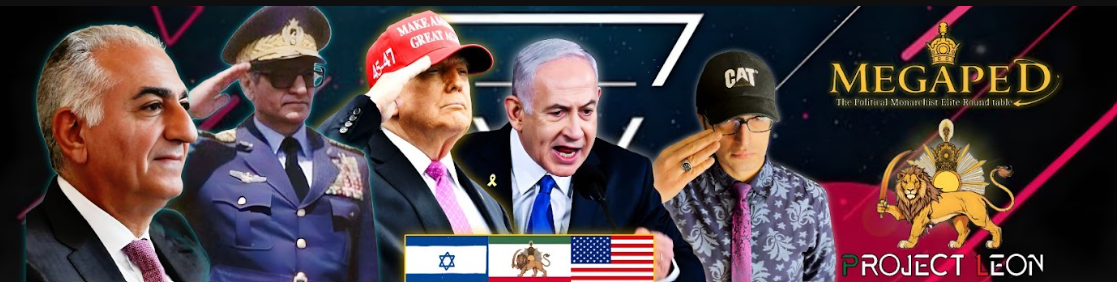

▶ Original broadcast in Farsi — English auto-generated subtitles enabled by default.
Watch on YouTube
Recent developments in the strategic triangle of the Middle East signal an imminent shift toward open conflict and internal collapse within Iran’s regime. Israel’s blunt public statements about entering war, combined with Project Leon’s exclusive intelligence on Iran’s deepening political and social crisis, demand a nuanced analysis of what lies ahead.
The Strategic Context
The volatile interplay between Israel and Iran has long defined Middle Eastern geopolitics, with the United States playing a critical role behind the scenes. Israel’s recent announcements, framing the approach of war as inevitable, coincide with mounting evidence of internal disintegration within the Iranian regime. The so-called “degree five collapse” crisis—an advanced stage of systemic failure—threatens to upend the fragile status quo. Meanwhile, Iran’s leadership grapples with failed political maneuvers, exemplified by what Leon terms the “Rouhani plan,” an attempt to stabilize the regime that is unraveling before our eyes.
Israel’s War Signal and Iran’s Political Turmoil
Israel’s open declaration of impending war is unprecedented in its directness. Moving beyond covert operations and proxy engagements, this signals a readiness to escalate militarily against Iran’s nuclear and regional ambitions. This stance reflects a strategic calculation: Iran’s internal weaknesses have tipped the balance, offering Israel—and by extension, its US partners—a window to act decisively.
Concurrently, Project Leon provides critical updates debunking rumors about key Iranian figures, notably the absence of any confirmed presence of Mojtaba Khamenei in the power structure, challenging Tehran’s narrative of cohesion. The regime’s plunge into a “degree five crisis” illustrates a catastrophic breakdown in governance and control, marked by factional infighting and eroding legitimacy. The so-called “Rouhani plan,” once seen as a potential lifeline, now appears as a failed last-ditch effort amid rising internal dissent and external pressures.
What This Means
The convergence of Israel’s war posture with Iran’s internal collapse creates a dangerous inflection point. On one hand, an Israeli military campaign could accelerate the disintegration of the Iranian regime, but on the other, it risks regional destabilization with unpredictable consequences. For the United States and its allies, this moment necessitates careful calibration—balancing support for pro-democracy movements within Iran while preparing for potential military escalation led by Israel.
Leon’s Assessment
From Project Leon’s vantage point, the unfolding scenario is both an opportunity and a challenge. The regime’s unraveling can pave the way for a democratic transformation under a Pahlavi-inspired vision, but only if external actors avoid reckless escalation that could strengthen hardliners or drag the region into protracted conflict. Israel’s candid war signals should be understood as a strategic lever rather than an inevitable path; diplomacy and covert support for internal resistance remain crucial. Ultimately, the coming months will define whether Iran’s crisis becomes a catalyst for liberation or a descent into chaos.
Leon is the founder and lead analyst of ProjectLeon International, specializing in Iranian geopolitics, the US-Israel-Iran strategic triangle, and the Iranian monarchist movement.