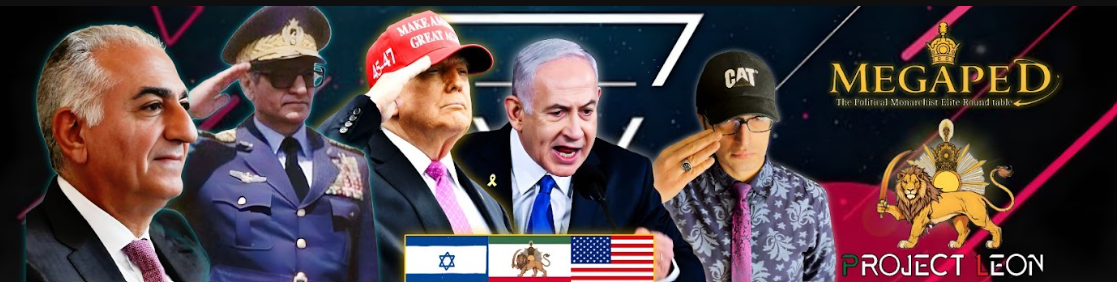

▶ Original broadcast in Farsi — English auto-generated subtitles enabled by default.
Watch on YouTube
In a recent update, Leon unveils a stark warning from former President Donald Trump about a potential tactical nuclear strike targeting Kuh-e Kallang in Iran’s Zagros Mountains. This revelation underscores the intensifying US strategic posture toward the Iranian regime, signaling a likely escalation of military pressure that could reshape the region’s geopolitical landscape.
The Strategic Context
The US-Iran confrontation has long been a focal point of Middle Eastern instability, with the Trump administration previously adopting a hardline stance aimed at regime change. Despite his departure from office, Trump’s influence within conservative and strategic circles persists, reflected in his recent assertions about an imminent “hellish” US military campaign against Tehran. The Zagros Mountains, a critical geographical and symbolic heartland for Iran, stand at the center of this emerging confrontation, highlighting the regime’s vulnerability to precise and high-impact strikes.
Trump’s Tactical Nuclear Signal and Military Build-Up
Leon interprets Trump’s mention of a tactical nuclear weapon as a calibrated psychological signal rather than an outright declaration of use. The reference to Kuh-e Kallang suggests a target of immense strategic value—likely an underground military facility or nuclear infrastructure deeply embedded in the Zagros range. This aligns with a broader US strategy to degrade Iran’s nuclear and missile capabilities through precision strikes rather than widescale conflict.
Concurrently, Leon details an unfolding “hellish” US military mobilization aimed at applying unprecedented pressure on the regime. This build-up involves deploying advanced forces and assets capable of rapid, surgical operations designed to dismantle Iran’s strategic depth. The combination of conventional and potential tactical nuclear options serves to underscore the seriousness with which the US views Iran’s ongoing nuclear ambitions and regional provocations.
What This Means
The implications are profound. A US campaign centered on strategic points like Kuh-e Kallang would severely disrupt Iran’s military command and control, nuclear development, and regional proxy operations. It would also send a chilling message to Tehran’s leadership about the costs of continued defiance. However, such escalation risks provoking asymmetric Iranian retaliation, potentially destabilizing the broader Middle East. The international community must brace for heightened tensions and prepare for rapid shifts in the security environment.
Leon’s Assessment
From Leon’s perspective, Trump’s warning is a deliberate move to recalibrate the strategic balance and to galvanize support for a resolute approach against the Iranian regime. The possibility of tactical nuclear use—while still remote—reflects the severity of the threat the US perceives from Iran’s nuclear trajectory. Leon advocates that only a decisive, well-orchestrated campaign combining military precision and diplomatic leverage can dismantle the regime’s ambitions and restore regional stability. He underscores the necessity for the US and its allies, particularly Israel, to maintain strategic ambiguity while preparing for all contingencies in this high-stakes confrontation.
Leon is the founder and lead analyst of ProjectLeon International, specializing in Iranian geopolitics, the US-Israel-Iran strategic triangle, and the Iranian monarchist movement.