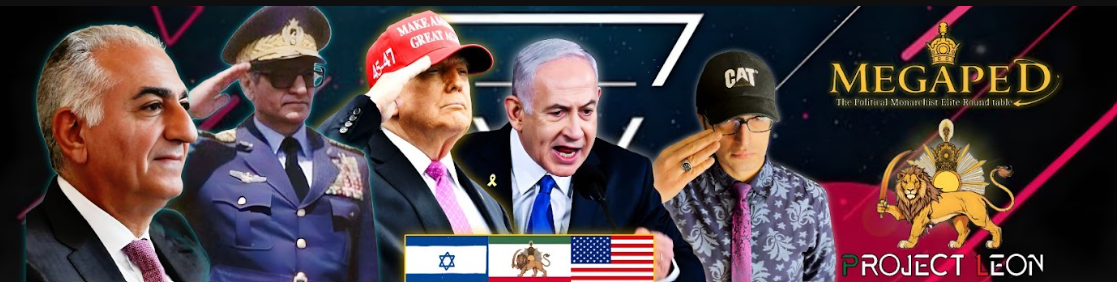

▶ Original broadcast in Farsi — English auto-generated subtitles enabled by default.
Watch on YouTube
The Iranian regime’s recent military mobilization in the southwestern region marks a significant escalation with direct implications for Kuwait and the broader Gulf security architecture. This aggressive posture signals Tehran’s intent to expand its influence through force, compelling a decisive response from the United States and its regional partners.
The Strategic Context
Since the 1979 Revolution, Iran has pursued a dual strategy of ideological export and regional dominance, primarily through proxy militias and asymmetric tactics. However, direct conventional deployments near Kuwaiti borders represent a more overt threat to Gulf stability, potentially destabilizing the already fragile security equilibrium. The US, under previous administrations, oscillated between engagement and containment, but the Trump era introduced a more confrontational stance aimed at regime change. Tehran’s current maneuvers test this resolve, raising the stakes in the US-Iran strategic triangle and implicating Israel’s security calculus as well.
Iran’s Military Maneuver: A Calculated Threat to Kuwait
Leon’s analysis reveals that the Iranian Revolutionary Guard Corps (IRGC) is orchestrating a concentrated troop build-up in southwestern Iran, explicitly preparing for an incursion into Kuwaiti territory. This is not a spontaneous move but a strategic campaign designed to pressure Gulf Cooperation Council (GCC) states and fracture the US-led regional alliance. Kuwait, often overshadowed by its larger neighbors, now emerges as a frontline victim of Tehran’s expansionism. The timing coincides with internal Iranian regime vulnerabilities and external geopolitical shifts, suggesting a calculated gamble to redefine power dynamics.
Moreover, this campaign serves multiple objectives for the regime: it projects strength domestically to suppress dissent, signals defiance against US sanctions and diplomatic isolation, and attempts to coerce Gulf states into political concessions. Leon emphasizes that Iran’s strategy is not merely territorial but psychological, aiming to erode the will of America’s regional allies and disrupt the US-Israel security nexus.
What This Means
The implications of Iran’s southwest military push are profound. A direct attack on Kuwait could trigger a broader regional conflict, drawing in Saudi Arabia, the UAE, and ultimately Israel, while forcing Washington to reassess its military and diplomatic posture. The risk of escalation is acute, with potential spillover effects on global energy markets and international security. This moment demands renewed urgency from the Trump administration and its allies to finalize a coherent strategy that goes beyond containment to actively dismantle the regime’s capacity for aggression.
Leon’s Assessment
From Leon’s perspective, the Iranian regime has crossed a critical threshold from proxy warfare to overt conventional threat, signaling desperation yet dangerous ambition. Trump’s policies, which prioritize regime change and robust deterrence, must now be fully leveraged to counter this aggression. Leon argues that the time has come for decisive action—whether through intensified economic pressure, bolstered military support for Gulf allies, or calibrated strikes to degrade IRGC capabilities—to end the regime’s expansionist designs. Failure to respond firmly risks emboldening Tehran further and jeopardizing the fragile security architecture that underpins Middle East stability.
Leon is the founder and lead analyst of ProjectLeon International, specializing in Iranian geopolitics, the US-Israel-Iran strategic triangle, and the Iranian monarchist movement.