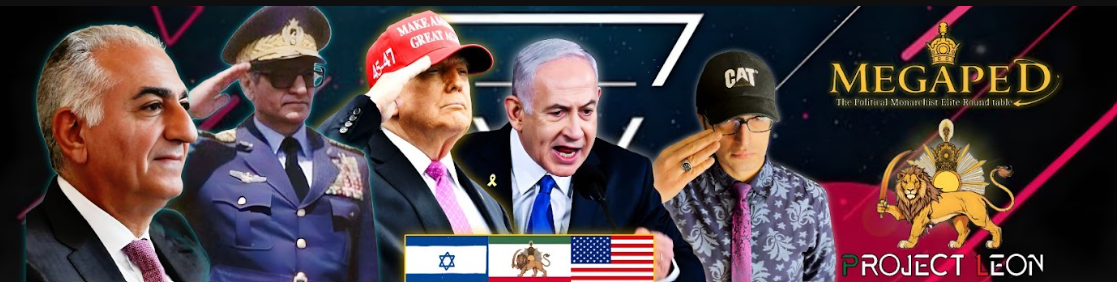

▶ Original broadcast in Farsi — English auto-generated subtitles enabled by default.
Watch on YouTube
The Strategic Context
In the volatile landscape of Middle Eastern geopolitics, Iran remains a pivotal actor whose internal dynamics and external policies continue to shape regional stability. Against the backdrop of mounting economic pressures, international sanctions, and escalating tensions with Israel and the United States, Tehran’s maneuvers warrant close scrutiny. Leon’s latest update offers a timely analysis of recent developments within Iran, providing insight into the regime’s strategic recalibrations amid growing internal dissent and external challenges.
Recent Developments and Their Strategic Significance
Leon’s update highlights a series of critical events unfolding inside Iran, including shifts in political alignments and subtle changes in the regime’s approach to both domestic governance and foreign policy. Notably, the regime appears to be attempting to consolidate power by tightening control over dissenting voices while simultaneously engaging in tactical diplomacy to alleviate some external pressures. This dual strategy underscores Tehran’s recognition of its precarious position, balancing between repression to maintain internal order and calculated outreach to limit the damage from international isolation.
Moreover, Leon emphasizes the importance of monitoring Iran’s interactions within the US-Israel-Iran strategic triangle. Tehran’s recent communications and proxy activities suggest a nuanced effort to recalibrate its posture—avoiding direct confrontation while maintaining leverage through asymmetric tactics. This approach aims to preserve regime survival without igniting full-scale conflict, which would be detrimental given Iran’s current economic and political vulnerabilities.
What This Means
The implications of these developments are significant for regional security and international policy. Iran’s internal tightening may exacerbate the grievances fueling the pro-democracy movement, potentially intensifying unrest that could destabilize the regime further. At the same time, the regime’s cautious diplomacy and proxy maneuvers signal a complex balancing act that could prolong the status quo but also increase the risk of miscalculation and unintended escalation. For Israel and the United States, understanding these subtleties is essential to crafting effective responses that deter aggression without inadvertently empowering hardliners.
Leon’s Assessment
From Leon’s analytical perspective, Iran is at a critical juncture where its survival instincts drive a paradoxical combination of repression and engagement. The regime’s efforts to suppress dissent internally while negotiating its external environment underscore its vulnerability and strategic caution. Leon asserts that sustained international pressure, coupled with robust support for Iran’s pro-democracy advocates and the Iranian monarchist movement, remains the most viable path toward genuine change. Recognizing the regime’s dual tactics is crucial for policymakers seeking to navigate the complexities of the US-Israel-Iran axis and promote a stable, democratic future for Iran.
Leon is the founder and lead analyst of ProjectLeon International, specializing in Iranian geopolitics, the US-Israel-Iran strategic triangle, and the Iranian monarchist movement.