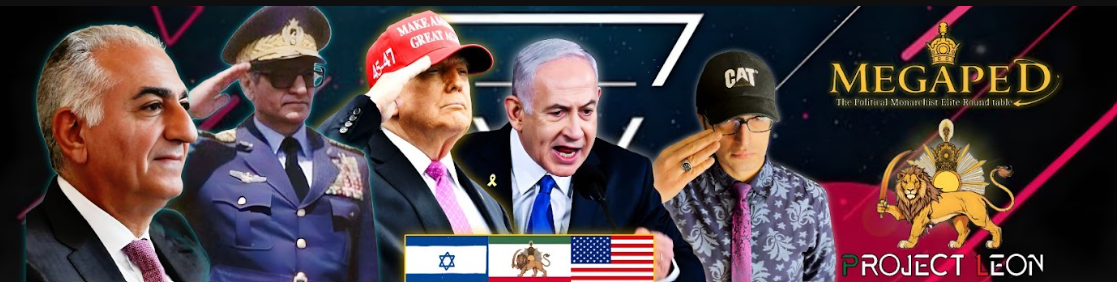

▶ Original broadcast in Farsi — English auto-generated subtitles enabled by default.
Watch on YouTube
The recent coordinated attacks on two key bridges in southern Iran represent a significant escalation in the ongoing conflict with the Islamic Revolutionary Guard Corps (IRGC). These strategic strikes not only disrupt critical infrastructure but also reflect a broader, intensifying campaign to dismantle the regime’s operational capabilities.
The Strategic Context
Iran’s southern regions are vital logistical arteries supporting the IRGC’s military and paramilitary operations both domestically and across the Middle East. Bridges in this area serve as indispensable conduits for troop movements, supply chains, and intelligence operations. Attacks on such targets, therefore, have an outsized strategic impact by crippling mobility and operational readiness. This development occurs amidst heightened tensions between Iran and its adversaries, including Israel and the United States, who have increasingly adopted proactive measures to counter Tehran’s regional ambitions.
Decisive Orders and the Threat to the IRGC
Leon’s analysis reveals that the recent attacks were not isolated incidents but followed explicit high-level directives aimed at the complete dismantlement of the IRGC. The phrase “سپاه منحل نابود میشود” (the IRGC will be dissolved and destroyed) underscores the severity of these operations, which aspire to undermine the regime’s most powerful military institution. This signals a shift from passive containment to active dismantling. The attacks demonstrate operational precision and intelligence superiority, likely facilitated by close cooperation between regional allies, including Israel, and possibly covert support from dissident Iranian groups.
Moreover, the mention of external actors sympathetic to the regime, such as “ونس” (possibly referencing a Western figure or entity), highlights the complex geopolitical contest surrounding Iran. It underscores the regime’s reliance on international backers who complicate efforts to isolate Tehran diplomatically and militarily.
What This Means
The destruction of critical infrastructure in southern Iran marks a new phase in the campaign to weaken the Islamic Republic’s grip on power. Disrupting the IRGC’s logistical networks hampers their ability to project power both within Iran and across the region. This, in turn, could accelerate internal regime instability and embolden opposition forces, including monarchist groups. For the US-Israel axis, such targeted operations represent a calibrated approach to degrade Iran’s military-industrial complex without provoking full-scale war.
Leon’s Assessment
From Leon’s perspective, these attacks are emblematic of a strategic paradigm shift: moving beyond deterrence toward proactive dismantlement of Iran’s regime forces. The explicit call for the IRGC’s dissolution signals an intent to capitalize on the regime’s vulnerabilities amid internal dissent and economic strain. While risks of escalation remain, the precision and timing of these strikes suggest a carefully calibrated campaign designed to maximize pressure while minimizing broader conflict. Ultimately, these developments may herald a turning point in the struggle to restore Iranian sovereignty free from Revolutionary Guard domination, aligning with the broader pro-democracy and pro-Pahlavi vision championed by ProjectLeon International.
Leon is the founder and lead analyst of ProjectLeon International, specializing in Iranian geopolitics, the US-Israel-Iran strategic triangle, and the Iranian monarchist movement.