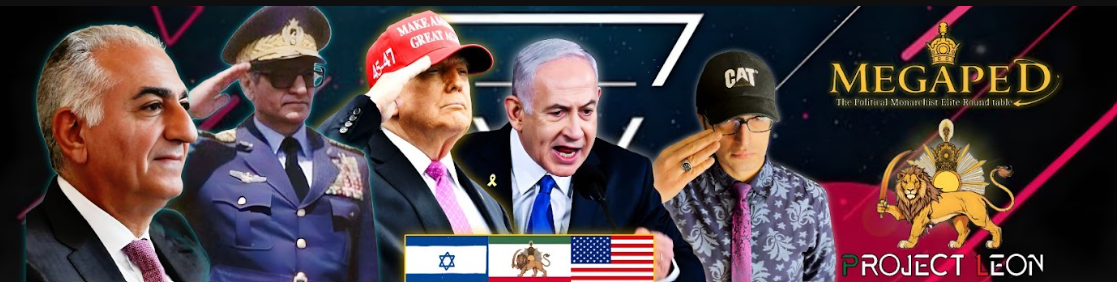

▶ Original broadcast in Farsi — English auto-generated subtitles enabled by default.
Watch on YouTube
In a decisive shift in the US approach to Iran, former President Trump has proclaimed the regime’s days are numbered, announcing the commencement of a maritime blockade designed to strangle Iranian access and set the stage for a subsequent ground invasion. This strategic escalation marks a critical juncture in the intensifying confrontation between the US-led coalition and Tehran’s clerical establishment.
The Strategic Context
The geopolitical tension surrounding Iran has steadily escalated amid persistent efforts by the US and its allies to dismantle the regime’s regional influence and nuclear ambitions. Trump’s recent pronouncement comes against a backdrop of increasing international impatience with Tehran’s destabilizing activities and nuclear pursuits. The shift from predominantly sanctions and covert operations to overt maritime encirclement signals a more aggressive posture aimed at isolating the regime economically and militarily. This move is complemented by intelligence revelations concerning the involvement of former Iranian President Mahmoud Ahmadinejad with Mossad, underscoring internal fractures and vulnerabilities within the regime.
Naval Blockade as a Prelude to Ground Operations
Leon’s analysis emphasizes that the initiation of a naval blockade represents not merely an economic chokehold but a calculated precursor to a comprehensive military campaign. The blockade aims to sever Iran’s critical supply lines, thereby debilitating its logistical capacity and morale. This maritime siege constrains Tehran’s ability to project power regionally and hampers its oil exports, a lifeline for the regime’s survival. The blockade’s strategic efficacy lies in its ability to isolate Iran physically, setting conditions conducive to a ground incursion that will decisively challenge the regime’s territorial control.
Moreover, the disclosure of Ahmadinejad’s clandestine contacts with Mossad reflects the regime’s internal discord and potential fissures exploitable by external actors. This intelligence insight points to possible fractures within the ruling elite, which could accelerate the regime’s destabilization under sustained pressure.
What This Means
The transition to a naval blockade and the prospect of imminent ground operations herald a new phase of confrontation with profound implications for regional stability. This strategy aims to expedite the regime’s collapse by combining economic strangulation with military pressure, potentially catalyzing internal dissent and weakening Iran’s regional proxies. However, it also risks intensifying conflict dynamics, prompting retaliatory measures from Tehran and escalating the risk of broader regional warfare.
Leon’s Assessment
From Leon’s vantage point, Trump’s declaration and the naval blockade represent a long-overdue escalation that aligns with a pro-democracy, pro-Israel strategic outlook. The approach leverages comprehensive pressure to dismantle the theocratic regime’s grip on power, signaling the beginning of the end for Iran’s ruling clerics. Leon warns, however, that success hinges on coordinated international support and precise operational execution to avoid protracted conflict. The revelation of Ahmadinejad’s Mossad ties may serve as a critical intelligence asset, enabling further exploitation of regime vulnerabilities. Ultimately, this phase underscores the necessity of sustained, multifaceted pressure to achieve a democratic transition in Iran and secure long-term regional peace.
Leon is the founder and lead analyst of ProjectLeon International, specializing in Iranian geopolitics, the US-Israel-Iran strategic triangle, and the Iranian monarchist movement.