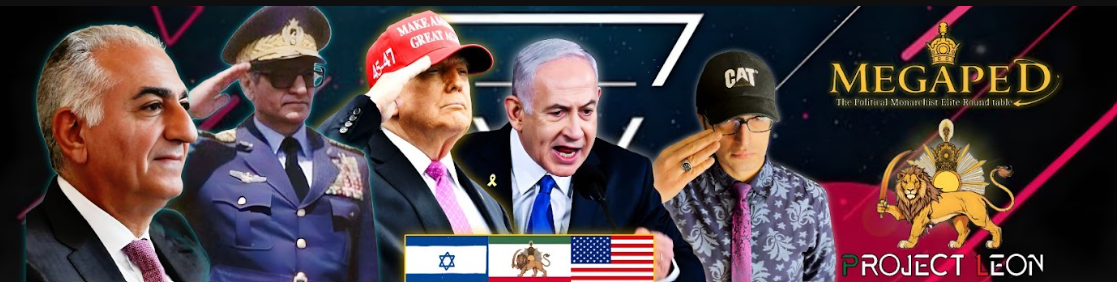

▶ Original broadcast in Farsi — English auto-generated subtitles enabled by default.
Watch on YouTube
In a rapidly evolving geopolitical landscape, the mysterious coded references to Senator Lindsey Graham’s death have sent ripples through U.S. and Middle Eastern strategic circles. Concurrently, the United States continues to escalate its military operations, signaling a decisive shift toward more direct confrontation. Leon unpacks these developments, arguing that a U.S. ground invasion in the region is no longer speculative but an imminent reality.
The Strategic Context
The Middle East remains a volatile theater where U.S. policies toward Iran and its proxies are intensifying. Lindsey Graham, a key hawkish voice in American politics, has recently been the subject of cryptic “death codes” circulating in intelligence and political networks, raising questions about internal power struggles and possible covert threats. At the same time, the U.S. has significantly increased airstrikes and military operations against Iranian-backed forces, signaling a transition from indirect pressure to active engagement. This backdrop highlights the growing tensions that underpin Washington’s strategic calculus in the region.
Analyzing the Death Codes and the Escalation of U.S. Military Actions
The coded references to Lindsey Graham’s death are not mere coincidence or rumor but appear to be part of a broader psychological and informational warfare campaign. These signals serve multiple purposes: undermining morale among hawkish U.S. policymakers, sowing confusion within U.S. intelligence circles, and signaling to Iran and its allies that the American political landscape is fractured. Such coded messaging may also reflect internal factionalism within the U.S. establishment over the direction of Middle East policy.
Simultaneously, the spike in U.S. military strikes marks a clear escalation from containment and proxy engagements toward active, kinetic operations. Leon’s analysis reveals that these actions are designed to degrade Iran’s regional influence decisively and prepare the battlefield conditions necessary for a potential ground invasion. The increased tempo of attacks suggests Washington’s strategic patience is waning, with a preference for rapid, direct confrontation over prolonged proxy conflicts.
What This Means
The intersection of these developments points to a significant inflection point in U.S. Middle East policy. The coded death references to a prominent hawk like Lindsey Graham symbolize the volatility and high stakes of this phase, where internal U.S. political dynamics intersect with external military strategy. The ongoing intensification of U.S. military operations signals that diplomatic avenues are narrowing, and a ground invasion—long debated and anticipated—is becoming an operational certainty. This shift will inevitably reshape regional alliances, heighten the risk of broader conflict, and test the resolve of U.S. partners such as Israel and Gulf states.
Leon’s Assessment
From Leon’s perspective, the mysterious death codes and escalating military aggression are not isolated phenomena but interconnected elements of a calculated strategic pivot. The United States is leveraging psychological operations alongside kinetic force to destabilize Iranian proxy networks and prepare for decisive action. The inevitability of a ground invasion reflects Washington’s recognition that airpower and sanctions alone cannot dismantle Tehran’s regional ambitions. For analysts and policymakers, this moment demands sober recognition of the risks and an urgent reassessment of the geopolitical balance in the Middle East. Leon underscores that the coming months will be critical, with profound implications for Iran’s regime, regional stability, and the U.S.-Israel strategic partnership.
Leon is the founder and lead analyst of ProjectLeon International, specializing in Iranian geopolitics, the US-Israel-Iran strategic triangle, and the Iranian monarchist movement.