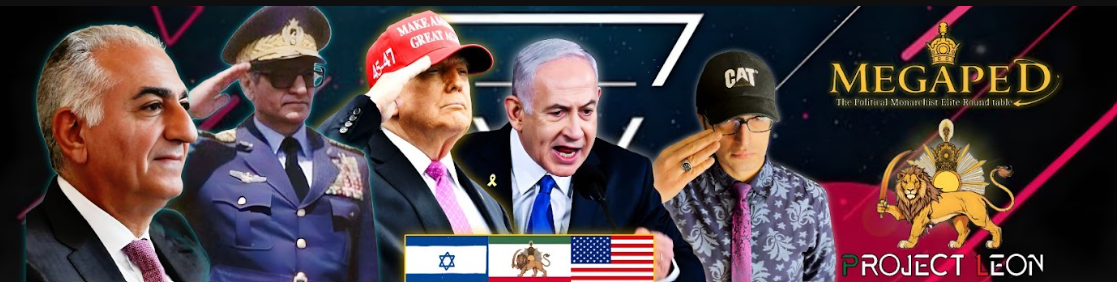

▶ Original broadcast in Farsi — English auto-generated subtitles enabled by default.
Watch on YouTube
Recent developments inside Iran reveal a rapidly deteriorating political landscape marked by secretive maneuvers and escalating internal conflict. A sudden trip by Supreme Leader Ali Khamenei to the United States, coupled with the funeral of prominent regime figures, points to a clandestine power struggle that may culminate in a coup. These events underscore the growing volatility within the Iranian regime’s factions, setting the stage for a decisive moment in Tehran’s political calculus.
The Strategic Context
The Islamic Republic of Iran remains deeply fractured as competing factions vie for control following years of economic hardship, international isolation, and internal repression. The Supreme Leader’s unexpected and covert visit to the United States—an unprecedented diplomatic overture—signals an attempt to recalibrate the regime’s strategic direction amidst mounting pressures. Simultaneously, the regime’s security apparatus appears increasingly fragmented, with open confrontations among powerful factions indicating a breakdown of centralized authority. This volatile environment threatens not only regime stability but also impacts regional security dynamics involving the US and Israel.
The Hidden Dynamics of the Supreme Leader’s Emergency US Visit
Leon’s analysis highlights that Ali Khamenei’s urgent journey to America is not a routine diplomatic engagement but rather a calculated move amid an existential crisis. This trip coincides with the symbolic funeral of Mohsali and his sons—a moment laden with political significance, possibly marking the extinguishing of a key faction’s influence within the regime. The timing suggests that the regime’s hardline and pragmatic wings are locked in a fierce contest for dominance. This internal war has escalated into what can be described as a “hot war” within the corridors of power, with power plays potentially culminating in a coup attempt to reassert control over the crumbling clerical establishment.
Leon interprets these events as a signal that the regime’s internal cohesion is rapidly unraveling. The clash between ideological purists and pragmatic elements seeking accommodation with the West creates a volatile environment where the regime’s survival hangs in the balance.
What This Means
The implications of these developments extend beyond Iran’s borders. A successful coup or regime reshuffling could result in a temporary de-escalation or, conversely, a violent crackdown that further destabilizes the region. For the United States and Israel, understanding these internal fissures is critical to shaping effective policy responses. The strategic uncertainty within Iran presents both risks and opportunities for the pro-democracy and pro-Pahlavi movements, which could leverage this turmoil to push for systemic change.
Leon’s Assessment
From Leon’s perspective, the current turmoil represents a critical inflection point. The Islamic Republic is not merely enduring internal disagreements but is undergoing a potentially terminal crisis of legitimacy and control. The clandestine US visit by Khamenei is a desperate bid to secure survival through backchannel negotiations, while the factional violence signals the regime’s imminent fragmentation. This moment should alert international observers and policymakers to the urgency of supporting democratic alternatives inside Iran. The pro-Pahlavi movement, representing a secular and nationalist vision, stands poised to capitalize on this instability to restore Iran as a stable, sovereign, and democratic state allied with the West and Israel.
Leon is the founder and lead analyst of ProjectLeon International, specializing in Iranian geopolitics, the US-Israel-Iran strategic triangle, and the Iranian monarchist movement.