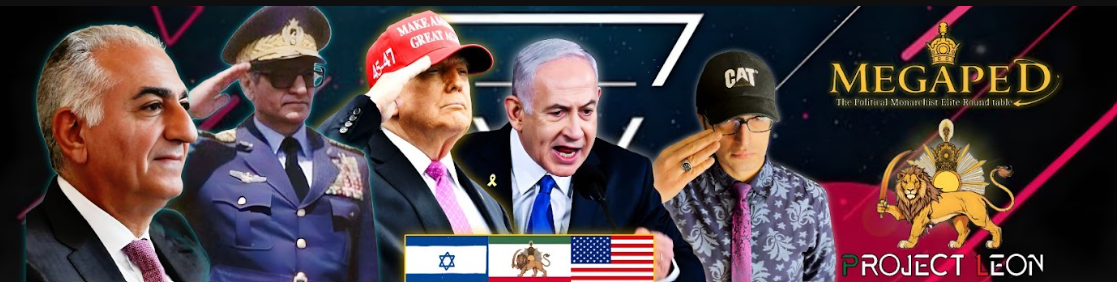

▶ Original broadcast in Farsi — English auto-generated subtitles enabled by default.
Watch on YouTube
The Strategic Context
In the shifting geopolitical landscape of 2026, the US-Israel-Iran dynamic remains volatile, with new intelligence revealing critical developments. The Iranian regime faces unprecedented internal and external pressures, while the Trump administration’s policies continue to influence the strategic calculus in the Middle East. Recent cyber operations targeting Iranian financial institutions and Israel’s operational deployment of the Iron Dome missile defense system underscore the escalating confrontation.
Trump’s Cognitive Trap and the Regime’s Collapse Plan
In this latest update, Pilot Mehran highlights what he terms the “cognitive trap” surrounding former President Donald Trump’s approach to Iran. This trap involves a strategic miscalculation where Trump’s focus on immediate regime change overlooks the complex socio-political realities within Iran that prolong regime resilience. Mehran argues that Trump’s aggressive posture may have inadvertently pushed the regime toward more covert and decentralized survival tactics rather than triggering a swift collapse.
Meanwhile, Iranian opposition forces and internal dissidents have been quietly developing a detailed “Plan for Regime Collapse,” aiming to exploit the regime’s vulnerabilities. This blueprint integrates both grassroots mobilization and cyber warfare, notably reflected in the recent widespread hacking of Iranian banks. These cyber incursions are not merely disruptive but designed to undermine the regime’s financial infrastructure, increasing internal instability and eroding public confidence.
What This Means
The convergence of Trump’s strategic missteps, the opposition’s collapse plan, and escalating cyber warfare signals a critical inflection point. The Iranian regime is increasingly vulnerable but remains capable of adaptive resistance. Israel’s recent operationalization of the Iron Dome, or “Golden Dome,” adds a defensive layer that deters Iranian missile provocations, aligning with broader regional security objectives. This complex interplay suggests that while regime change is not imminent, the internal and external pressures are intensifying, setting the stage for potential upheaval.
Mehran’s Assessment
Pilot Mehran’s expert analysis underscores that the path to Iran’s regime change is neither linear nor solely dependent on external pressure. The “cognitive trap” of expecting immediate collapse ignores the regime’s adaptive capacities and the necessity of sustained, multi-dimensional strategies—combining political, cyber, and military tools—to erode its foundations. The recent cyberattacks and Israel’s enhanced defensive posture illustrate the evolving tactics shaping this struggle. Mehran advocates for continued vigilance and strategic patience, emphasizing that a successful pro-democracy outcome in Iran demands nuanced understanding and coordinated action across all fronts.
Pilot Mehran is a military aviation analyst and co-host on ProjectLeon International, bringing firsthand expertise in aerial warfare, strategic air operations, and Iran’s military doctrine.