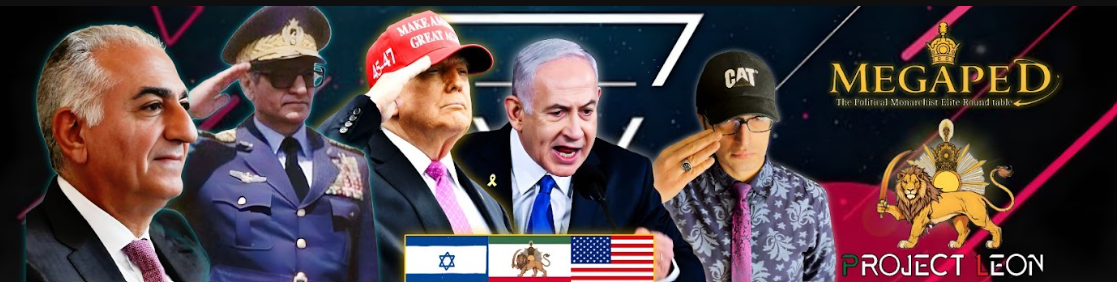

▶ Original broadcast in Farsi — English auto-generated subtitles enabled by default.
Watch on YouTube
The recent developments within Iran’s power structure signal a seismic shift in the country’s political landscape. The full capitulation of the Islamic Revolutionary Guard Corps (IRGC), the unexplained disappearance of former defense minister Vahidi, and intensified attacks against Hezbollah highlight an accelerating phase of strategic recalibration and potential regime transition.
The Strategic Context
Iran remains at a critical juncture where internal fractures and external pressures converge to destabilize the regime’s longstanding grip on power. The IRGC, once the regime’s most formidable and unyielding force, appears to be in a state of surrender — a development reflecting the profound erosion of centralized control. Concurrently, the mysterious vanishing of Mohsen Vahidi, a key regime insider, coupled with the ongoing targeted assaults on Hezbollah’s infrastructure, underscores a broader pattern of fragmentation and vulnerability. This confluence of events occurs against the backdrop of heightened US-Israel covert operations and intensifying domestic unrest, creating conditions ripe for what Leon terms a managed “transition period.”
The IRGC’s Capitulation and Its Implications
Leon’s analysis reveals that the IRGC’s capitulation is not merely a military defeat but a political watershed moment. The Guard’s traditional role as the regime’s ultimate enforcer and ideological bulwark is being fundamentally undermined. This shift suggests an internal consensus among Iran’s power elite that preserving the regime in its current form is untenable. The disappearance of Vahidi, a figure closely linked to the IRGC’s leadership, adds a layer of intrigue, possibly indicating internal purges or strategic realignments designed to facilitate a smoother transition.
Meanwhile, the sustained attacks on Hezbollah reflect a deliberate campaign to weaken Iran’s regional proxy network, thereby constraining Tehran’s influence beyond its borders. These operations, presumably led by Israeli and Western intelligence agencies, aim to exacerbate the regime’s external vulnerabilities and limit its capacity to retaliate, thus accelerating the pressure for systemic change within Iran.
What This Means
The convergence of these dynamics points to an emerging window of opportunity for a regime change that could be orchestrated rather than chaotic. The so-called “transition period” envisioned by Leon involves a controlled management of Iran’s political evolution, potentially allowing for a post-clerical order that aligns more closely with democratic and pro-Western principles. However, the risks remain immense, given the entrenched interests within the IRGC and hardline factions resistant to any dilution of their power. The international community, particularly the US and Israel, appear poised to leverage this moment to reshape the regional balance of power decisively.
Leon’s Assessment
From Leon’s perspective, the capitulation of the IRGC and the broader destabilization of Iran’s regime apparatus represent a rare and critical inflection point. He underscores that while the path to regime change remains fraught with unpredictability, the current trajectory offers the most tangible prospects for a pro-democracy and pro-Pahlavi future. Leon cautions that success hinges on sustained external pressure combined with robust internal opposition capable of filling the power vacuum without descending into factional violence. Ultimately, this period could mark the beginning of the end for the Islamic Republic and the dawn of a new era in Iranian politics and Middle East geopolitics.
Leon is the founder and lead analyst of ProjectLeon International, specializing in Iranian geopolitics, the US-Israel-Iran strategic triangle, and the Iranian monarchist movement.