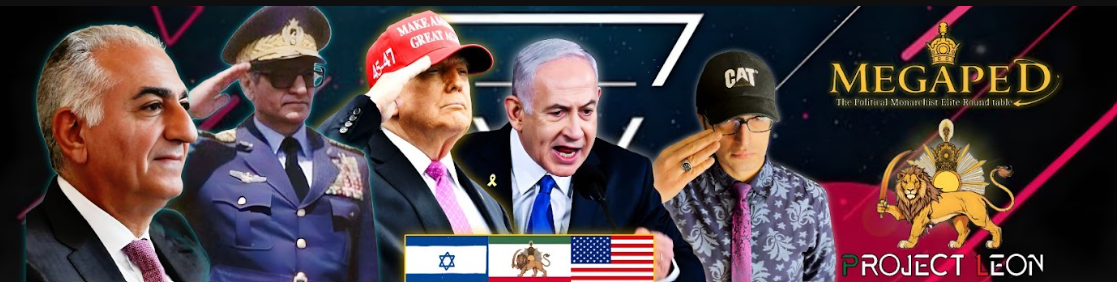

▶ Original broadcast in Farsi — English auto-generated subtitles enabled by default.
Watch on YouTube
As tensions escalate in the Middle East, recent developments reveal a critical inflection point for Iran’s regional proxies and the ruling regime. The mounting pressure from Trump’s policies is accelerating the disintegration of Hezbollah, while whispers of regime surrender grow louder. Understanding these dynamics is essential for grasping the shifting geopolitical landscape.
The Strategic Context
Since Donald Trump’s presidency, the US has adopted an aggressive stance against Iran, aiming to dismantle its regional influence and nuclear ambitions. This policy has included crippling sanctions, targeted military actions, and support for opposition movements. Hezbollah, Iran’s most powerful proxy in Lebanon, has been a key target in this strategy. The Lebanese group’s weakening position reflects broader vulnerabilities in the Iranian regime’s regional hegemonic project, signaling potential cracks within the Islamic Republic itself.
Hezbollah’s Collapse Amid Trump’s Pressure
Hezbollah, once a formidable force commanding significant military and political power in Lebanon, now faces unprecedented challenges. Economic collapse in Lebanon, internal dissent, and sustained military pressure have eroded Hezbollah’s influence. Trump’s sanctions regime has starved the group of resources, while Israeli intelligence and military operations have further degraded its capabilities. Leon’s analysis highlights that Hezbollah’s weakening is not merely a tactical setback but a strategic blow to Iran’s regional network.
Moreover, the term “fire of hell” used metaphorically captures the intensity of the pressure engulfing Hezbollah and by extension, the Iranian regime. Reports of factionalism and defections within Hezbollah suggest a loss of cohesion. This unraveling of Iran’s proxy structure is symptomatic of deeper systemic failures within the regime, which faces growing internal dissent and international isolation.
What This Means
The accelerating decline of Hezbollah foreshadows a potential unraveling of Iran’s regime stability. As proxies falter, the regime’s capacity to project power diminishes, increasing its vulnerability. The narrative of “surrender” or capitulation within regime circles indicates that Iran’s leadership may be contemplating strategic recalibrations to avoid total collapse. For regional actors and global powers, this moment presents both risks and opportunities in reshaping the Middle East’s geopolitical order.
Leon’s Assessment
Leon asserts that Trump’s decisive policies have brought the Iranian regime to a crossroads. The weakening of Hezbollah serves as a bellwether for the regime’s broader systemic crisis. While some may underestimate the significance of these developments, Leon emphasizes that the Islamic Republic is nearing a tipping point, where internal fractures and external pressures converge to threaten its survival. The prospect of regime surrender is no longer a distant speculation but an emerging reality that must be factored into strategic calculations by Israel, the US, and pro-democracy allies advocating for a free Iran under the Pahlavi vision.
Leon is the founder and lead analyst of ProjectLeon International, specializing in Iranian geopolitics, the US-Israel-Iran strategic triangle, and the Iranian monarchist movement.