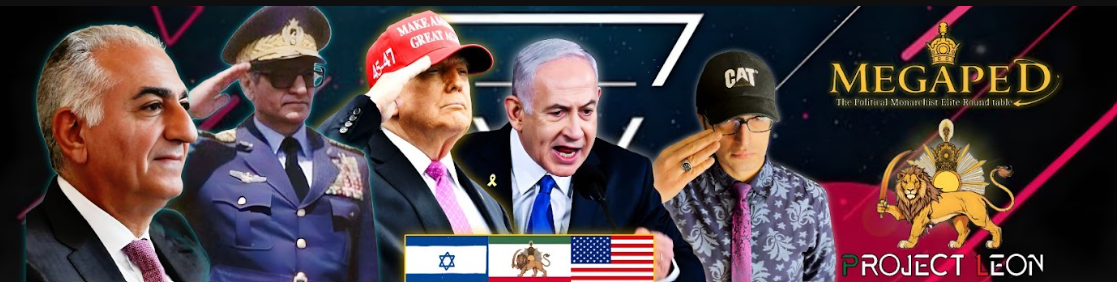

▶ Original broadcast in Farsi — English auto-generated subtitles enabled by default.
Watch on YouTube
After an uneasy sixty-day ceasefire, tensions between the United States, Israel, and Iran have sharply escalated. Former President Trump has explicitly announced plans for military strikes against the Iranian regime, while Israeli officials warn of imminent large-scale attacks. This shift signals a critical juncture in the volatile US-Israel-Iran strategic triangle, with profound implications for regional stability.
The Strategic Context
The sixty-day ceasefire, brokered amid rising regional hostilities, provided a brief lull in direct confrontations between Israel and Iranian-backed forces. This period allowed both sides to recalibrate their strategies amid mounting international pressure. However, the ceasefire was fragile from the outset, given the ideological rigidity of the Iranian regime and its ongoing support for proxy militias across the Middle East. The Trump administration’s renewed hardline stance reflects a broader strategic objective to contain and ultimately dismantle Iran’s regional influence through decisive military means.
Renewed Military Aggression: Trump’s Threats and Israel’s Preparations
Leon’s analysis underscores that Trump’s announcement is not mere rhetoric but part of a calculated campaign to pressure Tehran into submission. The end of the ceasefire is accompanied by clear signals from Israeli defense circles about impending large-scale operations targeting Iranian military infrastructure and proxy groups in Syria, Lebanon, and Iraq. These planned attacks aim to degrade the regime’s operational capabilities and disrupt its supply chains for advanced weaponry. The convergence of US political will and Israeli military readiness marks a significant escalation, potentially drawing the region into a broader conflict.
Importantly, this phase also reveals cracks within the international diplomatic consensus, with some regional actors expressing concern over the prospect of intensified warfare. Yet, from Leon’s perspective, the decisive message from Washington and Jerusalem is that the era of tolerating Iran’s malign activities is concluding. The strategic calculus now prioritizes military pressure alongside diplomatic isolation to force regime change or significant policy shifts in Tehran.
What This Means
The termination of the ceasefire and the imminent military strikes portend increased instability across the Middle East. For analysts and policymakers, this development necessitates close monitoring of Iran’s potential asymmetric responses, including escalations through proxy militias or cyber operations. The risk of a wider regional conflagration cannot be dismissed, especially as Iran may perceive existential threats to its regime security. Moreover, the US-Israel coordinated approach signals a more aggressive phase in countering Iranian influence, likely impacting global energy markets and geopolitical alliances.
Leon’s Assessment
From Leon’s pro-democracy and pro-Pahlavi vantage point, the end of the ceasefire and the strong stance by Trump and Israel represent a pivotal moment to challenge the Iranian regime’s authoritarian grip. Military action, though fraught with risks, is a necessary component in dismantling the regime’s destructive regional ambitions. Leon cautions, however, that sustained success depends on coupling military pressure with robust support for internal Iranian opposition movements and monarchist forces advocating democratic restoration. Only through a comprehensive strategy integrating external pressure and internal change can the cycle of conflict and repression be broken.
Leon is the founder and lead analyst of ProjectLeon International, specializing in Iranian geopolitics, the US-Israel-Iran strategic triangle, and the Iranian monarchist movement.