
The Islamic Revolutionary Guard Corps has long cultivated an image of invincibility. Through propaganda, parades, and proxy wars, it projected the image of a formidable military force capable of challenging the world’s greatest powers. That image has now been shattered beyond repair. The IRGC stands exposed as what it always was: a corrupt, bloated bureaucracy masquerading as a military force, more skilled at embezzlement than combat.
The Corruption Factor
The IRGC controls an estimated 40 percent of Iran’s economy. Its commanders are not warriors; they are businessmen in uniform. Decades of corruption have hollowed out the organization from within. Equipment budgets were diverted to personal accounts. Training was neglected in favor of construction projects. The result is an organization that looks impressive on paper but collapses at first contact with a professional military force.
Command Paralysis
The targeted elimination of senior IRGC commanders has created a leadership vacuum that the organization cannot fill. The command structure, designed for loyalty rather than competence, has no mechanism for rapid succession. Junior officers, promoted for their political reliability rather than military skill, are incapable of adapting to a fast-moving battlefield. The result is paralysis—units that cannot coordinate, cannot communicate, and cannot fight.
The Conscript Problem
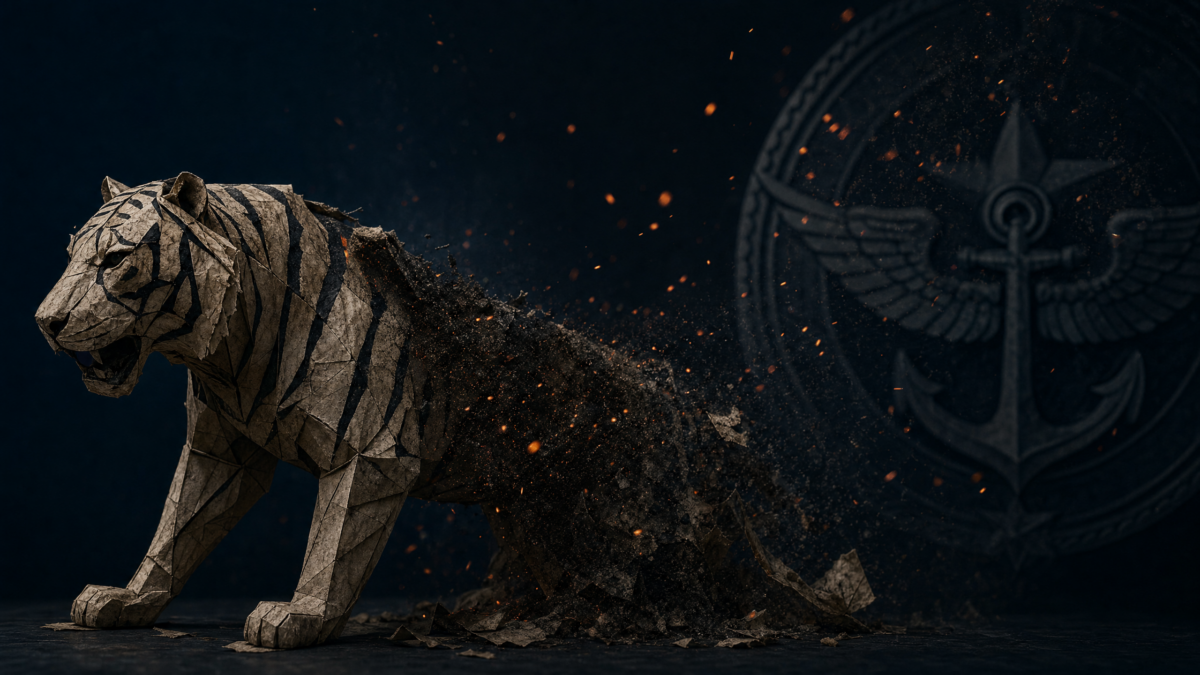
Perhaps most damning is the behavior of rank-and-file soldiers. Reports from multiple fronts indicate mass desertions, units refusing to fight, and conscripts surrendering at the first opportunity. These men were never motivated by ideology; they were pressed into service by a system that offered no alternatives. When the system began to crack, their loyalty evaporated instantly. The paper tiger has been set ablaze.